

Updated 1 week ago
Custom Flat Bottom Pouch Manufacturer: Turn Your Packaging Brief into an Approved Design
Cyan Pak Coffee
At Cyan Pak Coffee, we provide professional coffee packaging solutions for roasters, cafés, and beverage brands. From design and printing to production and delivery, our team offers a full range of custom packaging services. Our products include coffee bags, boxes, takeaway cups, and other packaging accessories, all customizable in materials, sizes, and print finishes. Focusing on sustainability, innovative design, and low minimum orders, we help brands create unique and efficient packaging experiences.

Custom Flat Bottom Pouch Manufacturer
The custom flat bottom pouch manufacturer requires more than just a logo and a desired capacity to create the appropriate coffee bag. The resulting pouch should be stable, show the artwork well, receive the product efficiently and help to preserve the product for the proposed sales period.
Many unnecessary revisions start when these decisions are taken on their own. The height of the bag alters proportions of artwork. The opening is different with a different zipper. When a new surface finish is used, the appearance of printed colours is changed.
The best way for coffee brands to come up with customised pack is to move the initial concept into a single coordinated production brief. This guide helps to define what that brief should accomplish prior to the order being approved.
Outline the purpose of What the Flat Bottom Format Must Achieve
Start with the why – the why of this format. Perhaps you need a more organized shelf show, the same look on multiple coffees or a bag that fits into specific presentation.
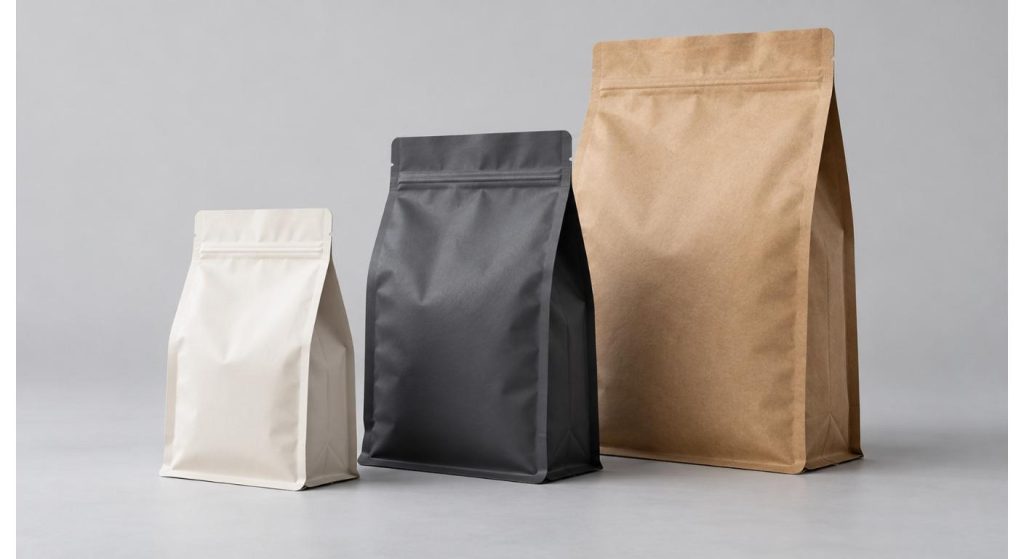
Cyan Pak offers their flat bottom pouches in the sizes, materials, printings and features for coffees and other dry products. They have a clear base that's allowed them to stand up, but the product itself requires some assessment now that it is going to contain the content.
Explain the practical aspects of sales. Add the shelf size, delivery method and if the customer will be opening the bag multiple times.
Discern between needs and wants. If the pack is designed for an established subscription carton, that requirement should be within the brief the designer has before designing the pack. The manufacturer can then judge the project by a definite objective.
Solve Proportions Before Finalizing the Artwork
The capacity, for example, 250g or 1kg is not the whole definition of a pouch. Width, height and gusset need to go hand in hand with the amount of space that your coffee takes up.
Find out how the manufacturer measures each dimension; request a drawing to eliminate confusion. Check if measurements quoted are for the empty pouch and if base and seals take up space.
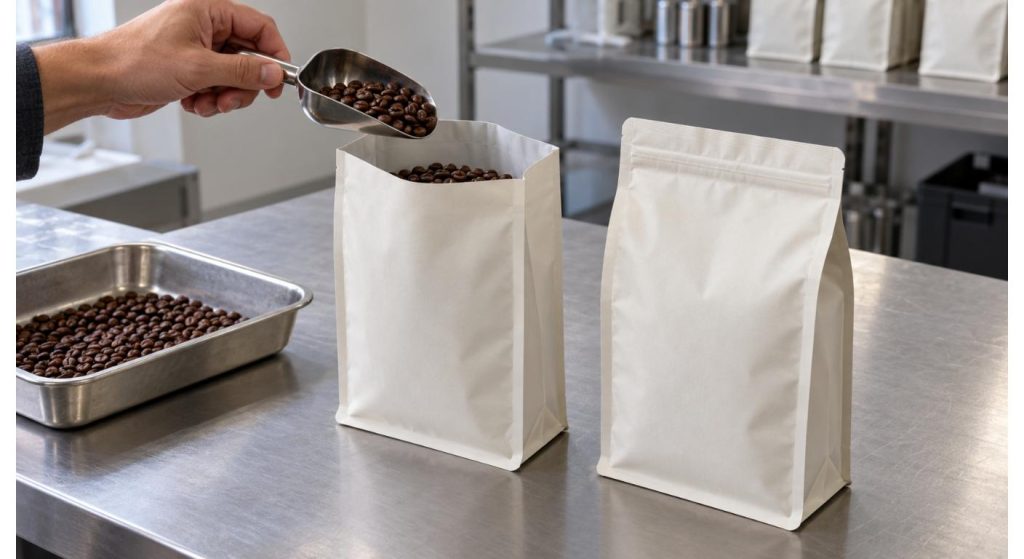
Fill a sample with the actual product. Examine the position, front-panel cover and clearance around the opening. The bag shouldn't be so tight that operators have to grind the coffee just to get to the seal area.
If multiple pack sizes are to be considered, assess these individually. Scaling up a design to larger proportions can result in less than optimal dimensions or carton packing. Set up proportions that can be used and then modify the brand system to fit the proportions.
Select the Material Structure (Prior to Final Surface Effect)
The material decision should include considerations for protection, handling and any environmental claim. Paper appearance, softness and colour should be part of that discussion, but it doesn't tell the whole picture of the construction.
If the project's focus is on recyclability, there's the opportunity to discuss recyclable coffee bags from Cyan Pak which are made using LDPE. Ensure the specific barrier to be built and parts, as well as suitability for the collection route in question.
Describe the coffee, conditions for distribution and anticipated storage time. Don't take a name for a familiar material for granted to define required performance; request supporting information.
Review completes when the structure is determined. The assessment of materials may be altered by a coating or additional decorative treatment. Verify the selected combination as one of the customers' specifications, particularly when various surfaces are suggested for various products.
Distribute Information in the Formed Pouch.
Flat bottom packaging provides a brand with multiple surfaces to play with. The problem is how to arrange those surfaces so that they reflect the way that the filled pack is presented to the customer.
Provide a clear purpose for the front – branding and coffee. Provide product information on other available panels. After the pouch is formed check the layout; folds and seals can affect what appears to be an orderly design on the computer screen.
Cyan Pak's packaging design service is a short process of brief, proposals, samples and feedback. Utilize that collaboration to solve panel placement prior to taking an attractive rendering to be final approval.
Ask for the production pattern of the agreed sizes. Ensure that key information is kept in the designated safe area and verify positioning of variable coding. Don't use a template, just a basic flat bottom one, which you can download for another pouch.
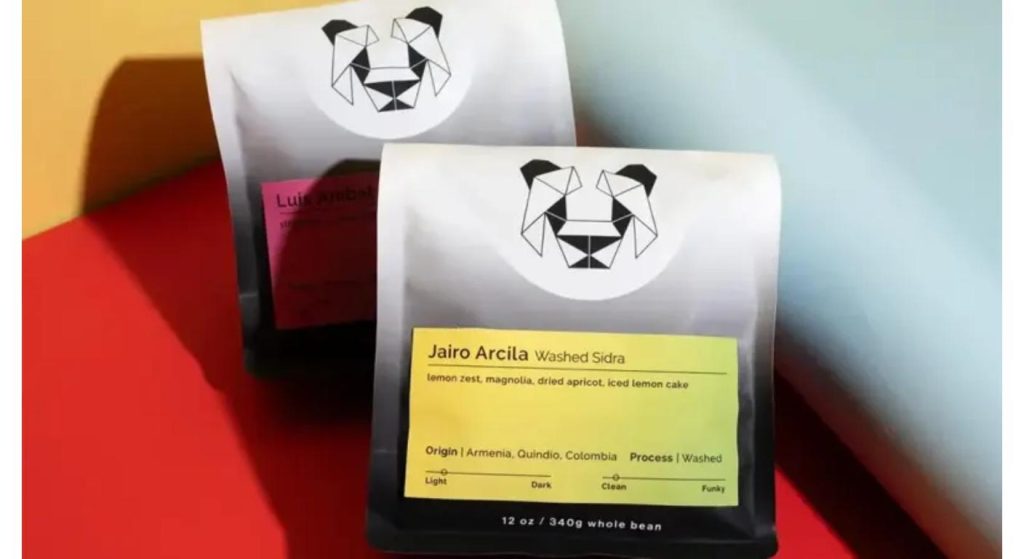
Place customizable features around filling and for customer use.
Each of the elements, valve, zipper, tear feature, opening, etc., takes up space. These should be correlated to the product level and the sealing arrangement.
If it is a freshly-roasted coffee, talk about a degassing valve and ensure that it is correct for the intended construction. Make sure it doesn't obstruct filling/gripping or the intended artwork.
Select the zipper that will be around the opening experience. The customer should be able to easily access the coffee and then be able to reclose the pack conveniently, and there should be sufficient working space above the fill for the operators.
Look at the full sequence with a sample that is filled. Discuss the initial sealed appearance, first opening and repeated reclosure. Extra features should address a specific need and adding all available features can make a pack too complex and not as useful in everyday applications.
Verify the Quantity of prints: per Design
Several of the coffees, sizes or languages are often included in a custom packaging project. Enter amounts for each piece of artwork for each size. Discuss that some designs are fixed and some designs can be made to change according to the availability of materials in different seasons. This assists the manufacturer in advising the acceptable printing technique and provide a helpful quote.
Cyan Pak's digital printing service is one way to provide customizable coffee packaging and lower MOQs. Check if it is appropriate for the chosen material and quantities, and validate the commercial terms that are appropriate for real project.
Accept colour and finish by a physical standard, if appropriate. While a screen proof serves the purposes of text and layout, it can't do the job when it comes to the printed substrate. Determine identification and approval of later revisions to artwork.
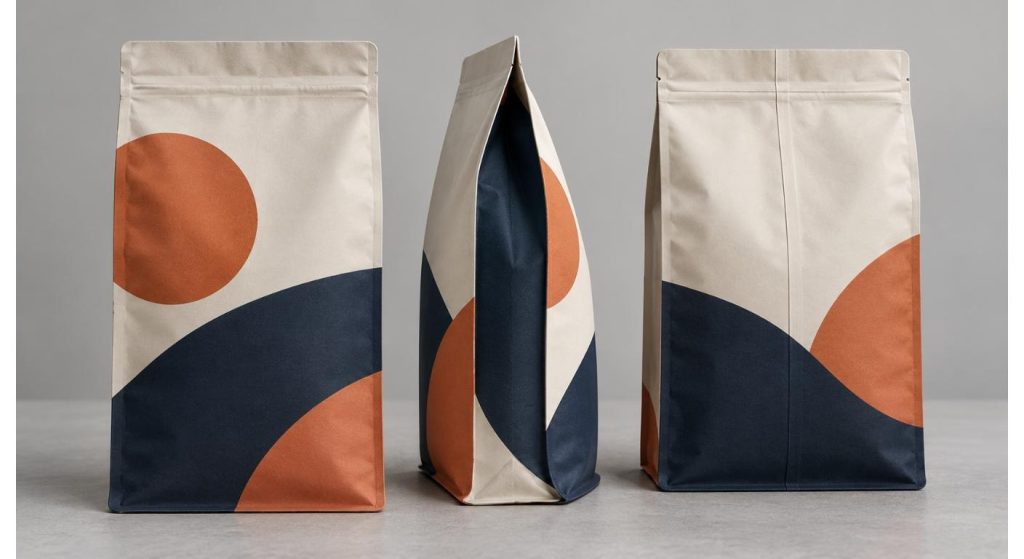
Be More Specific When Making a Sample Approval for Production
The question will determine the type of sample. A stock pouch can be used to illustrate a format, a material swatch can illustrate texture and a print-out sample can be used for an art review. None should be take to be automatically confirming each requirement.
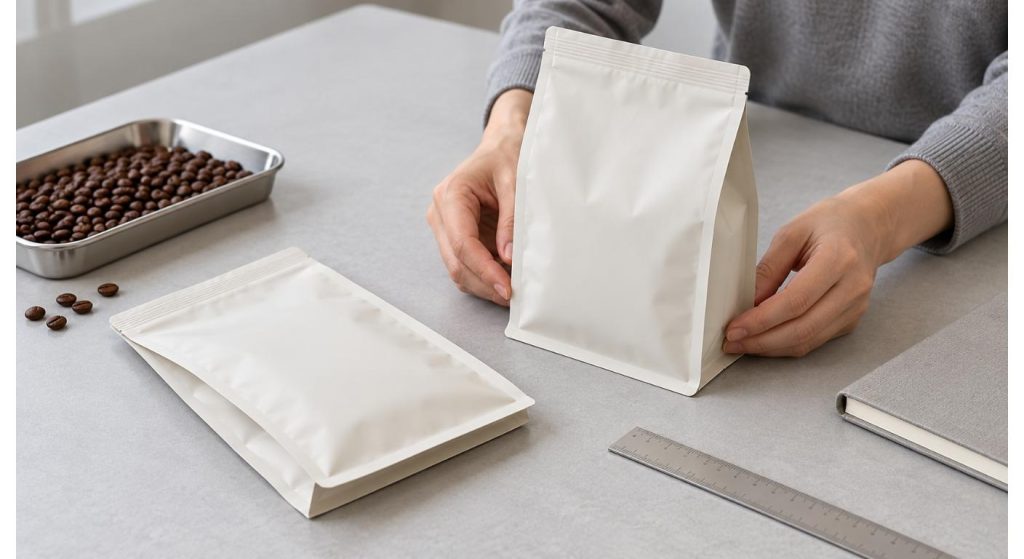
Coffee Packaging samples from Cyan Pak can assist to reduce the range of material and format preferences. Determine what is still different between the production bag and what is expected and determine how the differences will be addressed.
Document Approval based on agreed dimensions, construction, features and version of artwork. Add filling and handling observations that are important to your operation.
Establish packing arrangements, delivery requirements and follow up outstanding decisions before bulk production. Maintain the accepted reference in conjunction with the written specification. This provides a tangible foundation on how to evaluate the order delivered and making a consistent reorder with both parties.
| Project File | Essential Identifier | Suggested Owner |
| Pouch drawing | Drawing number and revision | Packaging lead |
| Print artwork | SKU, language, and artwork version | Brand team |
| Approved physical reference | Sample code and approval date | Quality team |
| Purchase specification | Specification revision and order number | Purchasing team |
Conclusion
Coordinating is a task involved in working with a custom flat bottom pouch manufacturer. Solve proportions, protection, artwork and functional details collaboratively, and approve a sample that will be the desired production specification. Provide Cyan Pak with your coffee type, size, quantity of artwork and sales needs to start an in-depth discussion of development.
FAQs
Q1. With a flat bottom pouch enquiry, what should I include?
Specify the product name, fill, desired size, art work specifications, quantity and target market. Consider filling and distribution constraints that may impact the design.
Q2. Are the same dimensions of pouches suitable for beans and ground coffee?
Maybe but not always - the volume they take up can vary. Test both products in a representative sample before approving one size for both.
Q3. Should art work be created first before deciding on the pouch size?
Finalise the production layout post agree on dimensions. The visual direction can be taken from an earlier concept but the template needs to be in line with the pouch ordered.
Q4. Is the minimum quantity the same for each custom flat bottom pouch?
Do not assume so. Ask for material confirmation for material, printing method, size and quantity per design.
Q5. Will a sample of the stock be sufficient for a custom order?
It can show specific features. If there are any discrepancies with respect to the ordered specification, confirm and request additional approval as appropriate.
Written by
Cyan Pak Coffee
At Cyan Pak Coffee, we provide professional coffee packaging solutions for roasters, cafés, and beverage brands. From design and printing to production and delivery, our team offers a full range of custom packaging services. Our products include coffee bags, boxes, takeaway cups, and other packaging accessories, all customizable in materials, sizes, and print finishes. Focusing on sustainability, innovative design, and low minimum orders, we help brands create unique and efficient packaging experiences.
Related Articles

Large Capacity Coffee Packaging: Match Bulk Packs to Handling and Customer Needs

Coffee Packaging for Retail Display: Match Your Pack to How Customers Shop

Sustainable Coffee Packaging Bags: Create a Coordinated Packaging Range