

Updated 1 week ago
Sustainable Coffee Packaging Bags: Create a Coordinated Packaging Range
Cyan Pak Coffee
At Cyan Pak Coffee, we provide professional coffee packaging solutions for roasters, cafés, and beverage brands. From design and printing to production and delivery, our team offers a full range of custom packaging services. Our products include coffee bags, boxes, takeaway cups, and other packaging accessories, all customizable in materials, sizes, and print finishes. Focusing on sustainability, innovative design, and low minimum orders, we help brands create unique and efficient packaging experiences.

Sustainable Coffee Packaging Bags
As a coffee brand expands, it's even more difficult to keep track of Sustainable Coffee Packaging Bags. A brand can start out with a single retail pouch, and then expand to seasonal coffees, wholesale products, and market-specific offerings. Each launch can incorporate its own packaging decision, materials, instructions and purchasing requirements – things can quickly become inconsistent.
The solution is a packaging system that has clear rules, and allows for legitimate variations. Bags don't have to be the same construction or design, just approved.
For roasters and brand teams with multiple products, here's how to create a cohesive line that revolves around Protection, Evidence and Practical Supply.
If an organism is taken from a wild population, ensure it comes from an organized range, before selecting a new bag.
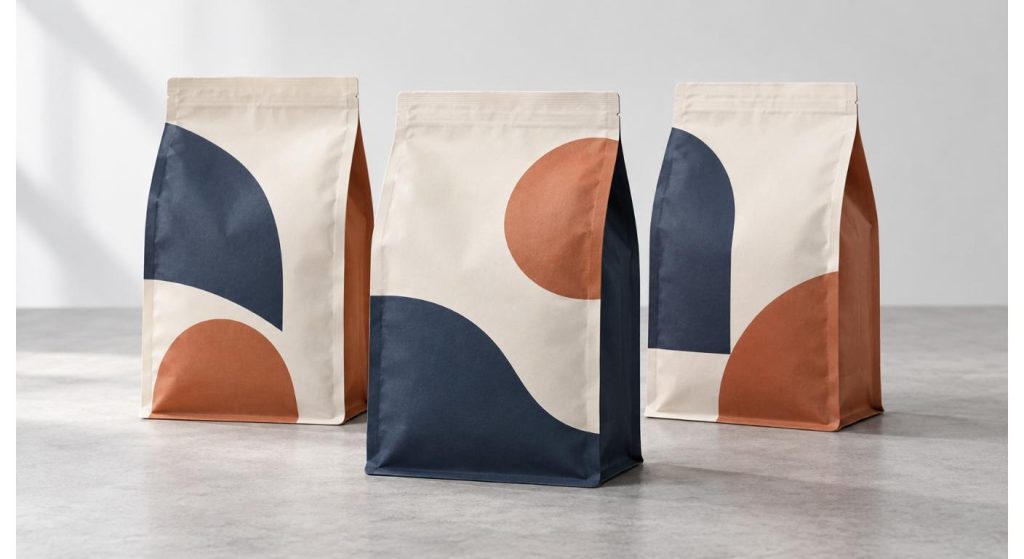
Start with those products that are already packaged. Organize them according to coffee type, weight per container, how they are distributed and how long they are likely to be in storage. Then determine those differences that need a new packaging specification.
The bag construction can be the same for several retail coffees with different artworks. A larger wholesale pack may require a different format and closure as it will have a different handling and consumption pattern.
Record exception instead of making a new material choice for each launch. This will make it easier to purchase and staff will have a better understanding of which bags are available to purchase or replace.
Review and add destination markets. A common construction can be used for a number of products and the disposal wording still requires local verification. The range should be more easily managed by consistency and yet there should be no concealment of significant differences.
Give Paper Options a Defined Role in the Range
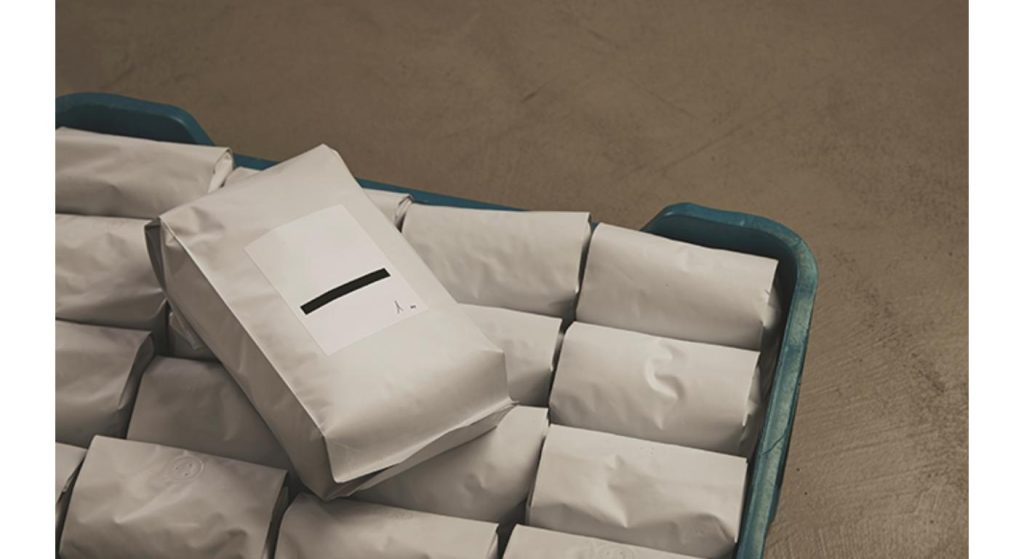
Paper-based appearances can help a brand to be natural or unique. The selected surface is more beneficial when there is a clear application of the selected surface within the packaging range.
Cyan Pak's coffee bags are made from kraft paper, both unbleached and bleached. These offer various visual elements, and the full bag can additionally consist of protective inner materials and functional elements.
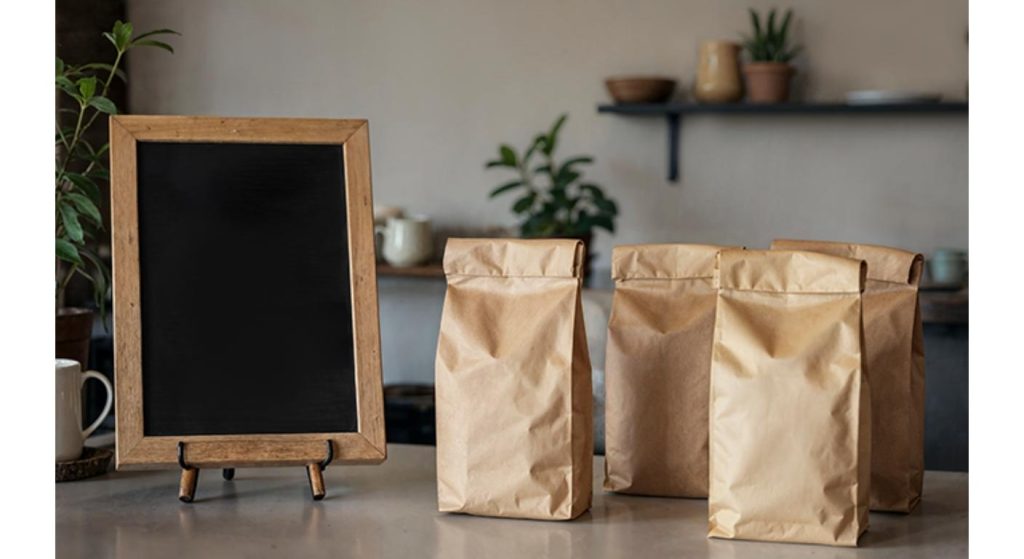
Another textured look is provided by its rice paper coffee bags which can be customized as well. Use physical samples to compare the surfaces: requirements for the same artwork and product presentation.
Do not make a judgment about appearance with a decision for disposal. The brown colouring and rough paper don't determine the way the completed bag is to be treated after use. For each acceptable choice, write down the complete construction, to prevent the use of the brand's "visual language" as a form of proof.
Create a Recyclable Bag Family to use Compatible Parts
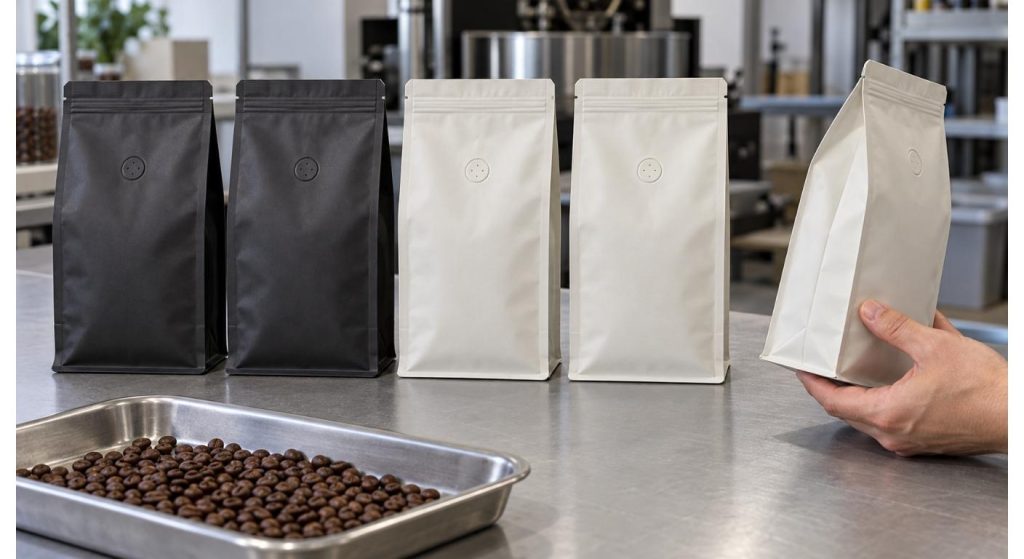
If a recyclable route is appropriate for the intended market, take into account whether a number of products can be based on the same material platform. Cyan Pak is a recyclable coffee bag, based on LDPE technology, and is highly customizable.
Talk about the entire proposed setup (addition of barriers, valves, zippers, coatings, labels etc.). Every change in a base material is not equivalent for recycling assessment, even if they are of the same type of material.
Establish parameters for permissible variations in the approved family and those requiring further consideration. A changed colour scheme could be a different art version and an additional window or accessory could impact on the end product.
Check for acceptance via the appropriate collection system prior to authorising instructions. Advice must be provided to the customer that corresponds to both the pack supplied and the route available. Don't think that one recycling claim is adequate for all markets because the bags are similar.
Compostable Options are a separate Packaging Route.
There is a need for evidence and assumptions about disposal for a compostable project. It should not be considered a visual variant of a bag that is recyclable.
Cyan Pak is a compostable coffee bag that offers choices for plant-based material and details on industrial composting. Request documentation for the conditions that would need to be in place in order to make the claim being proposed and for the actual construction that will be proposed.
Enlighten them about accessories included in that assessment. Recyclable is not an inherent characteristic of a component that would place it in a composting route.
Also determine if customers can get an appropriate service. It is important to note that industrial compostability and home compostability are distinct claims and should not be implied from the term biodegradable. Maintain material records, art work wordings and customer instructions in line with the route that has actually been supported for the ordered bag.
Specify the Protection Requirements globally and then set exceptions on a product level.
Even for a coherent range, a protection of each coffee needs to be created. Identify the distribution and storage needs of a number of products, and indicate one application that has different performance needs.
Ask for pertinent barrier data on the proposed project and verify the assumptions that underlie the data. Assess seals, closures and valves as a part of the completed package.
Don't assume that if a brand or company has a film in common that all the bag sizes will have the same performance in use. The application can vary due to filling conditions, seal geometry, handling, and the amount of coffee.
Determine suitability using representative trials, then find valid conclusions that are reasonable for the range. Keep exceptions visible. When a local line requires one type of validation and an export line requires another, despite their use of the same brand design and both are moving slowly, the local line may still need the additional validation.
Ensure Brand Consistency with Accurate Instructions
The range may appear cohesive, but not necessarily use the same environment language. Provide the same brand elements repeatedly and provide different information in the material depending on the market or its material.
Establish an internal reference system of linking the respective works to its packaging specification. Designers need to be aware of the proper disposal statement and component directions prior to releasing a new design.
Verify claims with any accessory, finish or construction changes. If a badge was copied from an older file that was taken from a different package, it may be out-of-date.
Coffee plans are also needed for variable coffee details. Determine what information will vary for each origin or roast and how this information will be used correctly. All other labels should be in the finished-pack review. A practical design system should minimize unnecessary revisions and maintain the necessary information for the customer regarding the bag.
| Reference Field | Example Code | Identifies |
| Material family | M02 | Approved construction reference |
| Bag size | S250 | Confirmed format for a 250g fill |
| Destination version | UK | Market-specific artwork version |
| Artwork revision | R03 | Approved design revision |
Maintain Sample/Reorder Tie to Approved Range
Coffee Packaging Material samples from Cyan Pak can be used to compare materials and bag formats. Use them to filter preferences and then determine what additional validation is required to determine the production requirements.
Keep approved references for every family of materials and note approved deviations. The purchasing staff should be able to relate the reorder to the appropriate construction and artwork without having to remember them.
Include quantities in plan based on size and design of demand. Standardization of useful elements can help the ordering process, but can't be a reason to stock too much of a seasonal coffee.
Post-shipping: check on damaged packages, unutilized stock and queries from customers regarding handling/ disposal. Use what you see to make adjustments to the range. If a change is proposed, update the reference, it applies to others if necessary.
Conclusion
Sustainable Coffee Packaging Bags make the most sense when it comes to managed range as opposed to product choice. Role out materials, check constructions and tie artwork to evidence. Talk to Cyan Pak about packaging families that can help you to purchase consistently and protect your product practically, including your coffee range, destination markets and order pattern.
FAQs
Q1. Is there a bag that can be used for all coffees that is sustainable?
Yes, if their need for protection and handling is adequately alike. Verify if a specification is suitable before using it in multiple products.
Q2. Is Kraft paper automatic compostable? Is rice paper automatic compostable?
No. Which claims they support depends on the complete construction and accessories. Ask for proof of the bag ordered.
Q3. Are there any recycled or composted bags that can be recycled or composted together?
No. They take various pathways. Align instructions to the particular structure and also the solutions offered in the destination market.
Q4. Does it make sense to have all products in the same bag size?
No. Materials or design principles shared can make a range easier and dimensions are appropriate for each fill weight and use.
Q5. Which of the following needs to be reviewed when adding a new finish or label?
Review completed artwork, material evaluation and construction. Ensure that the approval in place prior to change remains valid.
Written by
Cyan Pak Coffee
At Cyan Pak Coffee, we provide professional coffee packaging solutions for roasters, cafés, and beverage brands. From design and printing to production and delivery, our team offers a full range of custom packaging services. Our products include coffee bags, boxes, takeaway cups, and other packaging accessories, all customizable in materials, sizes, and print finishes. Focusing on sustainability, innovative design, and low minimum orders, we help brands create unique and efficient packaging experiences.
Related Articles

Large Capacity Coffee Packaging: Match Bulk Packs to Handling and Customer Needs

Coffee Packaging for Retail Display: Match Your Pack to How Customers Shop
Sustainable Coffee Packaging Bags: Create a Coordinated Packaging Range