


Updated 3 months ago
5 Design Tips for a High-Impact Drip Coffee Outer Pouch (Flat Bottom Version)
Cyan Pak Coffee
At Cyan Pak Coffee, we provide professional coffee packaging solutions for roasters, cafés, and beverage brands. From design and printing to production and delivery, our team offers a full range of custom packaging services. Our products include coffee bags, boxes, takeaway cups, and other packaging accessories, all customizable in materials, sizes, and print finishes. Focusing on sustainability, innovative design, and low minimum orders, we help brands create unique and efficient packaging experiences.

Drip Coffee Outer Pouch (Flat Bottom Version)
When consumers choose drip coffee, the outer pouch is often their first physical touchpoint with your brand. For flat bottom designs, this packaging format does more than just hold the inner hanging ear coffee bags—it defines shelf presence, freshness protection, and user convenience. A well-designed Drip Coffee Outer Pouch (Flat Bottom Version) can elevate the entire brewing experience from the moment the customer picks it up.
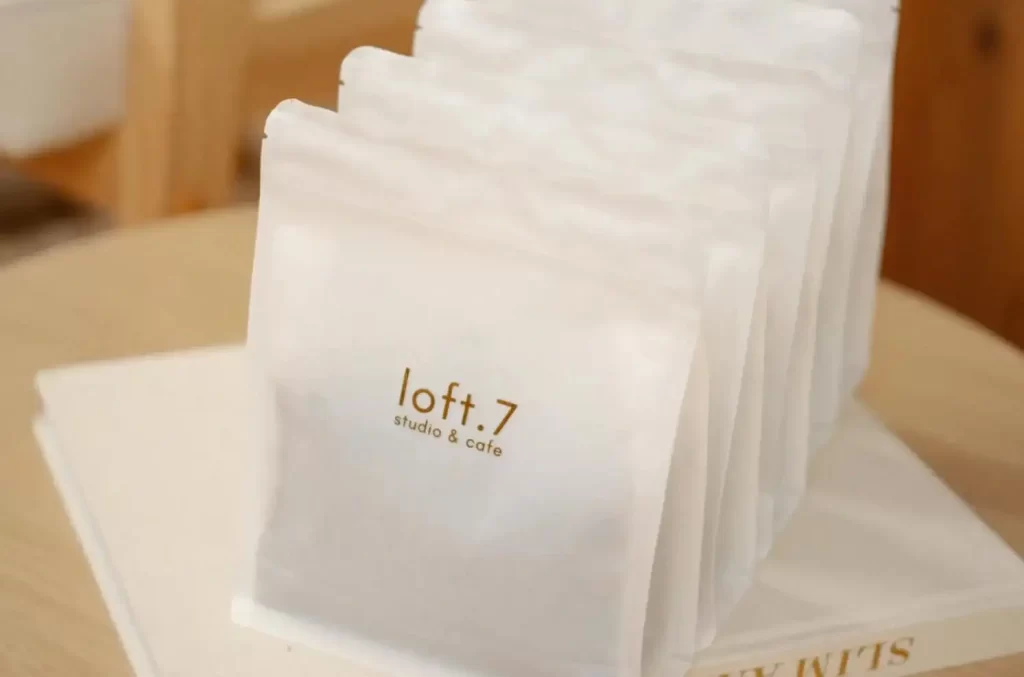
Below are five neutral, evidence-based design tips to help you create a high-impact flat bottom outer pouch. Each tip blends functionality, material science, and real-world usage scenarios.
1. Structural Rigor for Stability on Shelves and During Transport
Most flat bottom bags have the ability to stand on their own. But stability is not guaranteed for all flat bottom constructions.
• Widen the Bottom Gusset: A 40-50 mm gusset (approx. 250 g bag) lowers the center of gravity for the pouch, which makes the bag less likely to tip over when placed on display/shelf or when placed on a counter.
• Crescent Cut or Stepped Seal Reduces Bottom Corner Stress During Transport: Ensures the Drip Coffee Outer Pouch (Flat Bottom Version) can stand when packed close together in e-commerce shipping.
• Ensure Bag Weight Matches Film Thickness: 70-80 µm thick pouches can suitably hold 10-12 serving outer pouches (~100-150 g). Pouches meant for bulk 500 g or 1 kg will require thickness of 100-120 µm or greater to avoid pouch bulge.
• Example: Outdoor coffee brands who sell to campers need a bag design that can survive the compression of a packed backpack. A flat bottom bag design helps prevent the inner ear bag(s) from being broken.
2. High Barrier Materials that Maintain Flat Bottom Bag Design
A flat bottom bag relies on a very controlled fold. If the material is too stiff, bottom creases will be uneven and allow leakage.
• Use PET/Al/PE (12/9/70 µm) Symmetrical Film Structures: They have great moisture and oxygen barrier properties and will still form on a standard flat bottom bag making machine.
• Don't Over Metallize: When the aluminum layer is thicker than 12 µm, bottom folds will likely crack. EVOH-based all-PE laminates with WVTR > 0.5 g/m²/day are a good option.
• To test seal integrity, make a seam in two of the bottom corners. These corners are the weakest points of the pouch. When testing seams, do not let the seal bars get too hot. Use a seal bar temperature that is only slightly (5-10 °C) higher than the melting temperature of the pouch film's inner layer.
As a high-barrier Drip Coffee Outer Pouch (Flat Bottom Version) with a high-barrier inner bag, the construction of this bag will help preserve the freshness of the pre-ground Coffee for the 12-18 month shelf life of specialty coffee.
3. Use the Large Front and Bottom Panels for Brand Messaging
Due to the design of the Flat Bottom version, all other dimensions of the pouch are completely flat and rectangular. This is different from other stand-up pouches that contain a curved bottom seal. These features make for excellent packaging for high-impact graphics.
• Use the primary panel to display the primary graphic: Leave a 15 mm side seal allowance for large logos, general brew instructions, or a view window to the inner coffee bags.
• Use the bottom panel for a secondary message: Many consumers will turn the pouch over to read the additional details. Add "100% Biodegradable Hanging Ear Bags Inside" or a QR code leading to a brew video.
• Avoid critical design elements near the bottom fold line: During the bag making process, the fold area undergoes high mechanical stress; ink cracking or delamination often occurs there. Keep a 8 mm clear zone along the fold.
4. Optimize Opening and Reclosure Features for Home & Office Use
The outer pouch is opened and closed multiple times—especially when the inner hanging ear bags are used one by one. Poor reclosure leads to staleness and messy storage.
• Add a press-to-close zipper (recyclable PE type): Position the zipper 15 mm below the top seal. This leaves enough header space for laser scoring or a tear notch.
• Combine zipper with a degassing valve: For whole-bean coffee or freshly ground coffee inside the inner bags, CO₂ release continues. A one-way valve on the front panel (near the top) prevents pouch inflation without compromising the flat bottom's stand.
• Use laser scoring instead of a notch for a cleaner tear: A scored line across the full width creates a straight, easy open. Avoid notches on the side seals—they often tear diagonally and damage the zipper.
• User scenario: Office kitchens where multiple people access the same pouch benefit from a zipper that is wide (at least 80 % of the pouch width) and has thumb-friendly finger lifts. The flat bottom keeps the pouch steady while one hand holds the zipper open.
5. Design for End-of-Life: Recyclable or Biodegradable
Sustainability is no longer optional. However, not all eco-materials work well with the flat bottom forming process.
• Choose kraft paper with a thin PLA lining: Pure kraft paper lacks the heat-sealability and crease retention needed for flat bottom pouches. A 30 µm PLA inner layer adds seal strength while keeping the paper's natural look.
• For fully recyclable LDPE flat bottoms: Use MDO-PE (machine direction oriented polyethylene). It has higher stiffness than standard LDPE, allowing the bottom gusset to hold its shape during filling.
• Test compostable PLA films on slow-cycle bag makers: PLA requires narrower sealing temperature windows (±5 °C). Ask your pouch supplier for a forming trial before mass production.
• Neutral advice: No material is universally "best." A recyclable Drip Coffee Outer Pouch (Flat Bottom Version) works well for curbside recycling regions; a compostable option suits brands selling direct to zero-waste stores. Always state the disposal method clearly on the pouch.
Why Choose Cyan Pak for Your Flat Bottom Drip Coffee Outer Pouch?
At Cyan Pak, we combine engineering precision with sustainable material expertise to deliver high-impact flat bottom pouches. Design and Technology benefits include:
�� Variety and Options: Product examples include foil pouches, recyclable LDP packaging, and biodegradable bags. These options can be packaging made with Kraft paper, rice paper, or biodegradable, compostable, and plant-based films. We evaluate each of these for barrier performance and integrity of seal and flat bottom formability.
�� Customization: We have tooling with the capacity to adjust bottom gusset width for sample pouches starting at 10 g and going up to 20 kg bulk formats. We help you calculate the optimal pouch size for your inner hanging ear bag stack.
�� Smart add-ons integrated with flat bottom design:
• Zipper (recyclable): Leak-proof and easy to align with the bottom panel.
• Laser scoring: Clean tear without damaging the bottom fold.
• Degassing valve: BPA-free and recyclable, placed away from the fold area.
• Tin tie & tear notch: For non-zipper pouches that need repeated closure.
• Plastic hang hole: Ideal for retail peg displays—punched on the top header, not interfering with the flat bottom.
• Proven machinery compatibility: Our flat bottom pouches run on high-speed filling lines with consistent openability and heat seal strength. We provide a dimensional checklist to avoid jams.
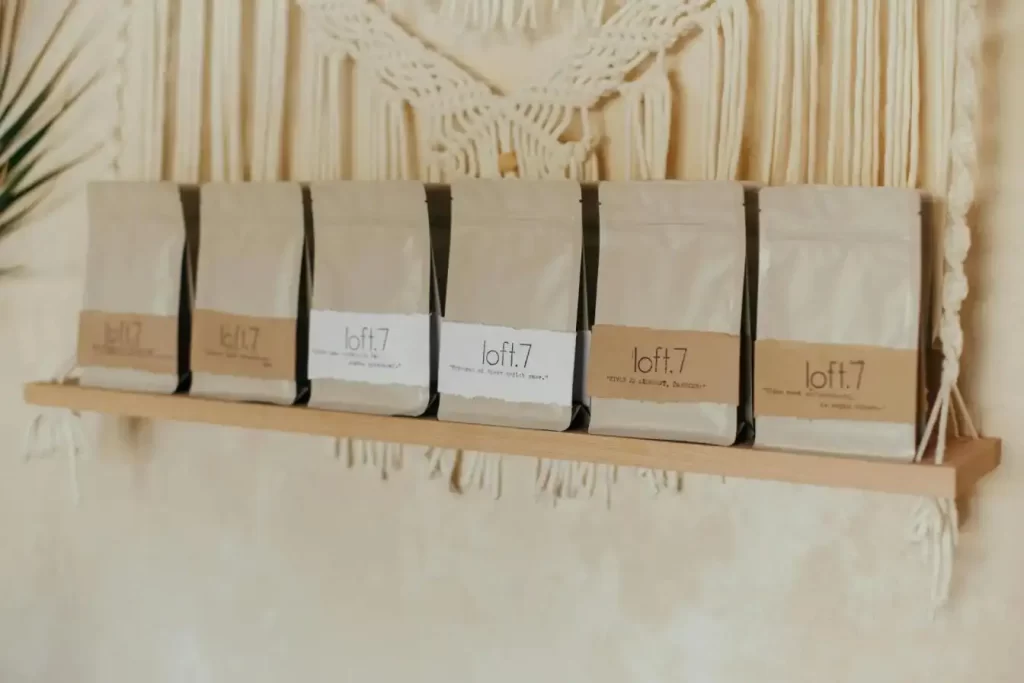
By applying these five design tips, your Drip Coffee Outer Pouch (Flat Bottom Version) will not only protect the delicate hanging ear coffee bags inside but also communicate quality, convenience, and responsibility—right from the shelf to the last brew.
Frequently Asked Questions (FAQ)
Q: Can the Drip Coffee Outer Pouch (Flat Bottom Version) hold both hanging ear bags and loose ground coffee?
A: Yes. Adding a degassing valve and resealable zipper makes a flat bottom design practical for inner hanging ear bags, single serve sachets or loose grounds. However, for loose coffee, a degassing valve is strongly recommended.
Q: Which weight size is most common for retail drip coffee outer pouches?
A: For household use, 100 g to 250 g (containing 8–20 hanging ear bags). For travel or office stations, 35 g to 75 g single-serve outer pouches are popular.
Q: Can I print cooking instructions or QR codes on the bottom panel?
A: Absolutely. The wide, flat bottom of this pouch version is ideal for secondary graphics. Keep artwork at least 8 mm away from the fold line to avoid cracking.
Q: Are recyclable flat bottom pouches as strong as foil-based ones?
A: Stiffness and Oxygen Barrier of New MDO-PE (Machine Direction Oriented Polyethylene) are Comparable. For extended shelf life (>12 months), foil is still superior; for 6-9 months, recyclable LDPE works well.
Q: What add-ons work best with the flat bottom design?A: Degassing valves and zippers are most compatible. Hang holes should be placed on the top seal area only. Avoid tin ties on narrow side gussets—they may deform the bottom fold.
Written by
Cyan Pak Coffee
At Cyan Pak Coffee, we provide professional coffee packaging solutions for roasters, cafés, and beverage brands. From design and printing to production and delivery, our team offers a full range of custom packaging services. Our products include coffee bags, boxes, takeaway cups, and other packaging accessories, all customizable in materials, sizes, and print finishes. Focusing on sustainability, innovative design, and low minimum orders, we help brands create unique and efficient packaging experiences.