


Updated 2 months ago
Flat Bottom Pouch for Coffee: Guide to Design, Materials, and Freshness Performance

Cyan Pak Coffee
At Cyan Pak Coffee, we provide professional coffee packaging solutions for roasters, cafés, and beverage brands. From design and printing to production and delivery, our team offers a full range of custom packaging services. Our products include coffee bags, boxes, takeaway cups, and other packaging accessories, all customizable in materials, sizes, and print finishes. Focusing on sustainability, innovative design, and low minimum orders, we help brands create unique and efficient packaging experiences.
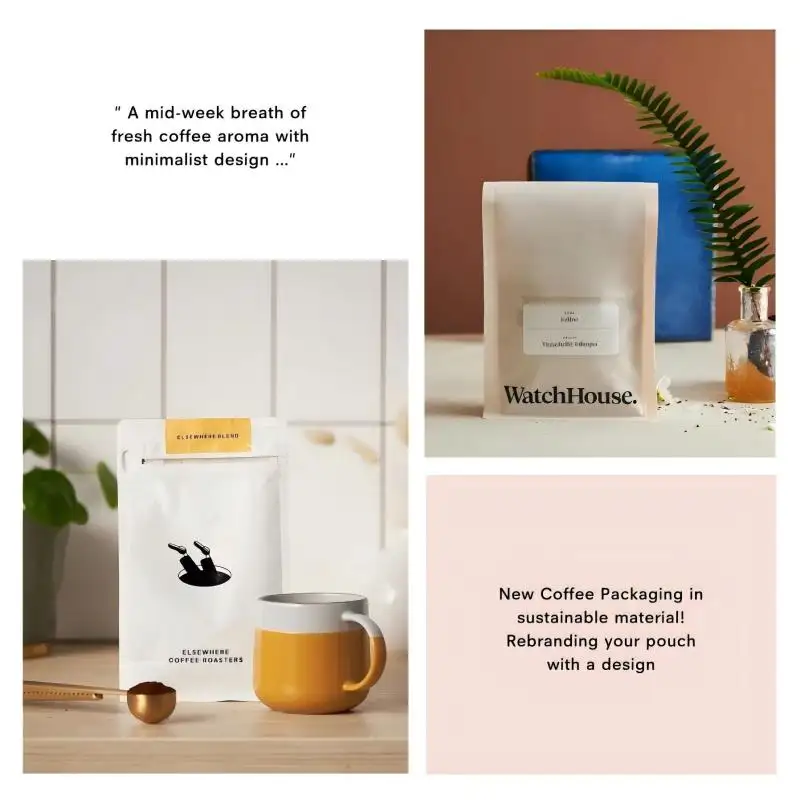
Flat Bottom Pouch for Coffee
The flat bottom coffee pouch is a flexible packaging solution that accommodates high-efficiency functionality and is often seen with specialty, retail, and private labeled coffees. This packaging format integrates a gusset and side panels in such a way that the pouch can stand while remaining stable and presents well on the shelf.
While the packaging format is visually appealing, it is also designed to protect roasted coffee from the elements that negatively affect quality - oxygen, moisture, and light. In addition, it supports the various logistics needs of the supply chain from filling to storage to transport.
This guide offers an overview of the engineering design and material systems, dimensions, freshness technologies, features, and the OEM customization of the format.
1. Structural Design of Flat Bottom Coffee Pouches
Flat bottom coffee pouches are primarily formed of multi-layer film laminated and sealed at filling openings. After filling, a bottom gusset that expands into a rectangular base provides a stable pouch.
Key Design Features
1) Improved Retail Visibility
The pouch is self-standing, and its visibility in an unobstructed display is optimal.
2) Improved Logistics
Pouches save a significant amount of space in filling, storage and shipping when compared to rigid containers.
3) Flexible and varied filling systems
•Manual filling systems for small batch and artisanal pouch coffee are possible.
•Automated pouch filling systems can be easily integrated.
4) Ample surface area for branding
Front, rear and side panels are available for:
•Articulation of brand ethics and values
•Details on coffee sourcing and profiles
•Regulatory and other required
•Information. (i.e. Nutrition facts, etc.)
•QR codes make integration of track and trace systems almost effortless.
2. Material Systems and Barrier Engineering
Flat bottom pouches utilize laminated films to create barriers to moisture, oxygen and light. These pouches can be optimized for product performance by understanding the structures and fundamental interactions.
Flavor and aroma of coffee can be eroded by exposure to various environmental factors. The progressive destruction of coffee's volatile or delicate aroma can be arrested using barrier engineering.
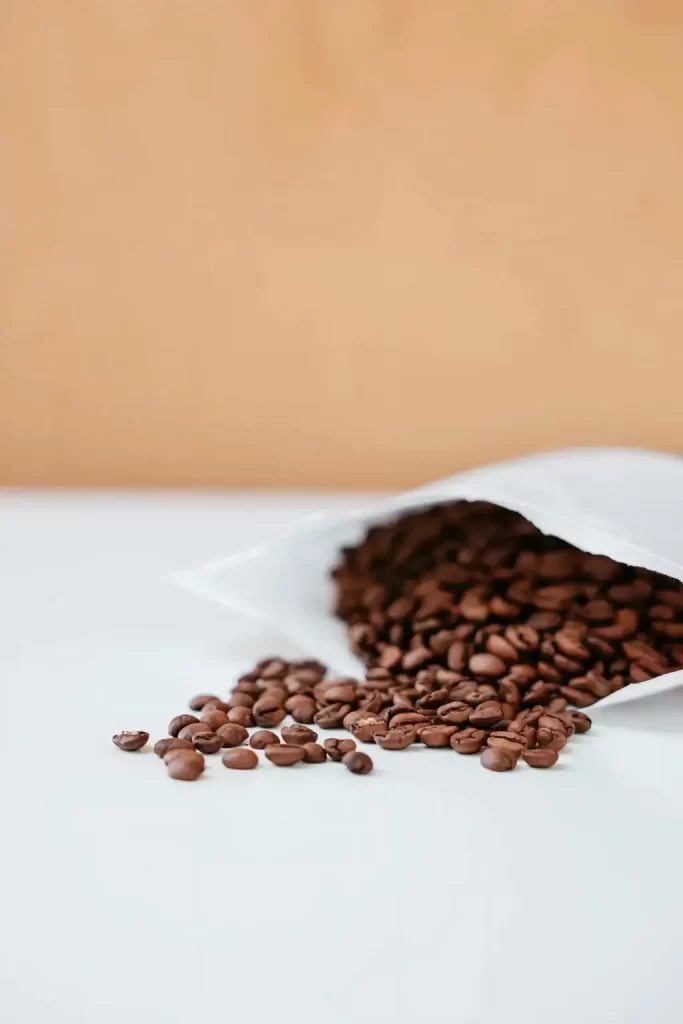
Typical Material Structures
| Material Type | Key Attributes | Typical Use |
| Al foil laminate (PET/AL/PE) | Provides an excellent barrier for moisture, light, and oxygen; gives long protection for shelf-life | Premium whole beans and ground coffee which require long transit times |
| Recyclable mono-material PE (LDPE-based) | Designed for specific recycling streams and can provide barrier enhancements with coatings (EVOH) | Brands focused on recyclability and circular packaging |
| Compostable PLA-based films | Materials based on biopolymers and typically necessitate industrial composting; often combined with other barrier liners | Medium to short shelf-life coffee, positioned as sustainable, and is mainly for specialty use |
| Kraft paper + barrier inner layer | Provides natural aesthetic and outer layer of packaging, combined with liner for protection | Artisanal and craft coffee branding |
| Paper-based specialty laminates | Provide limited barrier capabilities and a textured aesthetic | Highly premium coffee with a visual statement |
Additional Comments on Material Selection
Modern engineering of coffee packaging often incorporates multiple layers, such as:
•PET for structural integrity
•EVOH as an oxygen barrier
•PE for seal integrity
This allows the manufacturer to avoid packaging over-engineering and balance shelf-life and sustainability along the packaging cost.
3. Coffee Packaging Sizes and Weight Standards
Flat bottom pouches are used across a wide range of fill volumes depending on consumption patterns and distribution channels.
Standard Coffee Pouch Weight Guide
| Segment | Weight Range | Application |
| Sample packs | 10g – 100g | Cupping sessions, marketing samples, subscription boxes |
| Retail packaging | 150g – 500g | Cafés, supermarkets, e-commerce retail units |
| Wholesale packs | 750g – 2.5kg | Food service, office supply, secondary repackaging |
| Bulk storage formats | 3kg – 20kg | Roasting facilities, industrial ingredient supply |
Industry insight
Selecting the correct size is not only a marketing decision—it directly affects:
•Oxygen exposure after opening
•Trade-off between rapid consumption and the retention of the product's first state
•Reduction of waste in packaging
In general, packaging in smaller, consumption-oriented segments improves the perception of freshness and reduces the degradation of the product after the first use.
4. Technologies for the Preservation of Freshness
A flat bottom pouch for packing coffee utilizes two major protective systems:
•Barrier laminate structure
•Gas management systems (with integrated degassing)
1) Barrier film protection
The state of the art in high-quality coffee packing employs multi-layered films designed to:
•Minimize oxygen transmission
•Control water vapor
•Light protection
These properties help slow the oxidation of coffee oils and help preserve aroma compounds that are sensitive and volatile after roasting.
2) One-way degassing valve
Freshly roasted coffee releases carbon dioxide (CO₂) for several days after roasting. Without gas release, internal pressure may build within sealed packaging. One-way degassing valve systems control this pressure.
Standard Functional Structure
A typical valve consists of:
•Silicone or elastomer membrane
•One of the plastics housing (usually PE or PP)
•One-way pressure release system
•Microporous or slit mechanism for controlled venting
Functionality
•Allows CO₂ to escape from inside the pouch
•Prevents oxygen from entering from outside
•Maintains pouch shape and prevents swelling
•Eliminates the need for vacuum packaging (which can damage aroma release profile)
�� Note: Valve designs vary by manufacturer, but most modern systems rely on pressure-sensitive silicone or polymer membranes, not multi-material mechanical assemblies.
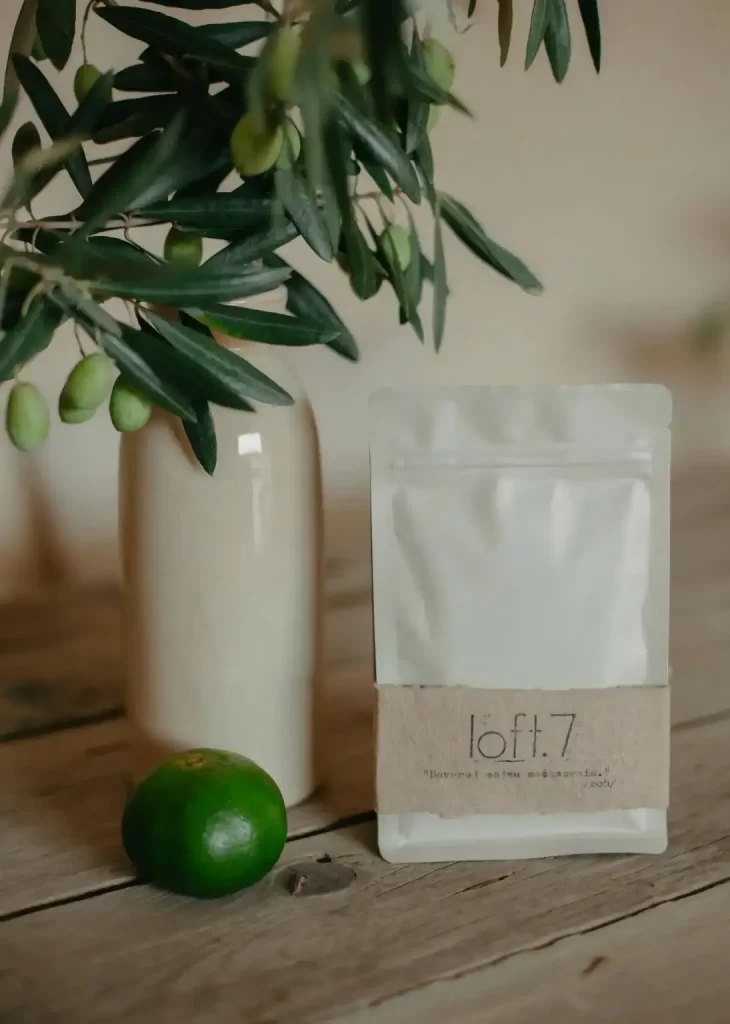
3) Heat Sealing Integrity
Consistent top seals are necessary to ensure:
•No micro-leakage of oxygen
•Stable modified internal atmosphere
•Protection against humidity exchange during transport
5. Insofar as Functional Add-Ons and User Experience Features
Current coffee packaging combines a variety of functional enhancements to address usability, shelf-life, and retail challenges.
Common Add-on Features
| Feature | Function |
| Resealable zipper | Allows repeated openings/closings and minimizes exposure to air |
| Degassing valve | Blocks O2 ingress while allowing CO₂ to escape |
| Tear notch | Controlled first opening, leaving bag intact |
| Laser scoring | Provides a premium user experience with opening lines that are neat and straight |
| Tin tie closure | Used in bags that are larger and roll-down sealing is done |
| Hang hole | Opens the bag for a peg retail display |
Application Logic
•Sample packs → only one add-on feature (tear notch)
•Retail packs (250-500g) → two add-on features (zipper and valve)
•Bulk packs → two add-on features (tin tie and reinforced)
Feature selection should be informed by consumers and the turnover of products. Appealing aesthetics are merely a by-product.
6. OEM / ODM Customization for Flat Bottom Pouches
Using an OEM/ODM process to acquire a flat bottom pouch for coffee means that you can fully control the functional and aesthetic design.
Typical Customization Process
Step 1: Structural Design
•Draw up plans for each layer of the design, factoring in its shelf life
•Set target levels for each layer's barrier performance (OTR/WVTR)
•Design with considerations for the minimum thickness of the layer and seal strength.
Step 2: Size and Geometry Design
•Decide dimensions of the pouch (width, height, gusset depth)
•Work out the fill weight of the beans factoring in their density
•Design with considerations for the fill equipment.
Step 3: Function Design
•Choose between different types of zippers and design along the tear line
•Choose the position of the valve (front, side, or back)
•Design the opening.
Step 4: Printing and Branding
•Design graphics in a way to optimize the use of flat surface area.
•Printing can be done in rotogravure or digital formats, along with storytelling and history elements, along with origin and roast information.
7. Manufacturing Considerations (OEM Partner Capability)
An experienced coffee packaging manufacturer typically demonstrates:
•Uniform strength of Bonding during Lamination
•Precision in Multi-Panel Register Printing
•Consistent Seal Integrity across diverse Heat and Pressure Conditions
•Dimensional Stability in Automation-Ready Filling Line Systems
Cyan Pak is an example of an OEM-focused supplier providing coffee companies a wide range of options in the design and manufacture of custom solutions for flat bottom coffee pouches.
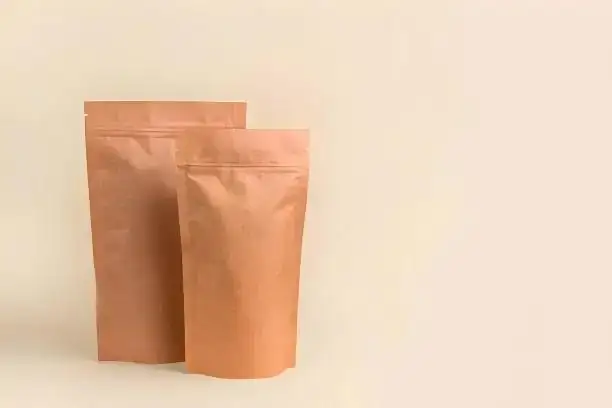
8. Practical Performance Perspective
In practice, the performance of flat bottom coffee pouches is defined by the integration of several systems, including:
•Barrier Film (controls oxidation)
•Valve (controls gas escape)
•Seal (prevents leaks)
•Structure (enables efficient transport)
•Features (enhance customer experience)
When implemented in the proper design, this type of pouch can help preserve the flavor of coffee from the time of roasting, through shipping, to the final end use, all while assisting the coffee brand in capturing a unique position on the shelf.
Conclusion
The flat bottom coffee pouch is an advanced design in packaging systems, and is an integration of several layers including protection, functional design, and branding.
The best solution is influenced by:
•Desired coffee shelf-life
•Level of sustainability impacted
•Specific route of shipment
•Consumer packaging end use behavior
Through the intelligent use of processing technologies and selection of materials and design for structure and function, coffee companies can enhance their systems for packaging which preserves the aroma and improves the brand's efficiency and effectiveness in the market.
FAQs
Q1. Can flat bottom coffee pouches be recycled?
Some mono-material PE flat bottom coffee pouches can be recycled, whereas multi-layer foil laminates cannot be recycled.
Q2. What are the advantages of flat bottom pouches for coffee?
Flat bottom pouches for coffee help with an attractive display on the shelf, preserve the freshness of the coffee, and provide an easy and efficient way of storing and shipping coffee.
Q3. What are the typical materials used?
Typical materials used are foil laminates, recyclable PE structures, kraft paper composites and compostable PLA films.
Q4. How long can coffee remain in these pouches and be fresh?
It can remain in these pouches and be fresh for many months, but it depends on the quality of the barrier and the seal.
Q5. Should all coffee pouches have a degassing valve?
It is not necessary for all coffee pouches to have a degassing valve, but it is a good idea for a freshly roasted coffee to allow control of the released CO₂.
Written by
Cyan Pak Coffee
At Cyan Pak Coffee, we provide professional coffee packaging solutions for roasters, cafés, and beverage brands. From design and printing to production and delivery, our team offers a full range of custom packaging services. Our products include coffee bags, boxes, takeaway cups, and other packaging accessories, all customizable in materials, sizes, and print finishes. Focusing on sustainability, innovative design, and low minimum orders, we help brands create unique and efficient packaging experiences.