


Updated 2 weeks ago
Flat Bottom Pouch vs. Side Gusset Bag for Coffee Packaging
Cyan Pak Coffee
At Cyan Pak Coffee, we provide professional coffee packaging solutions for roasters, cafés, and beverage brands. From design and printing to production and delivery, our team offers a full range of custom packaging services. Our products include coffee bags, boxes, takeaway cups, and other packaging accessories, all customizable in materials, sizes, and print finishes. Focusing on sustainability, innovative design, and low minimum orders, we help brands create unique and efficient packaging experiences.

Flat Bottom Pouch vs. Side Gusset Bag
When it comes to selecting the proper coffee packaging, coffee roasters should consider shelf stability, volume, valve, zipper integration, filling and exchange, branding zones and packaging economics all of which Flat Bottom Pouch (FBP) and Side Gusset Bags (SGB) vary in.
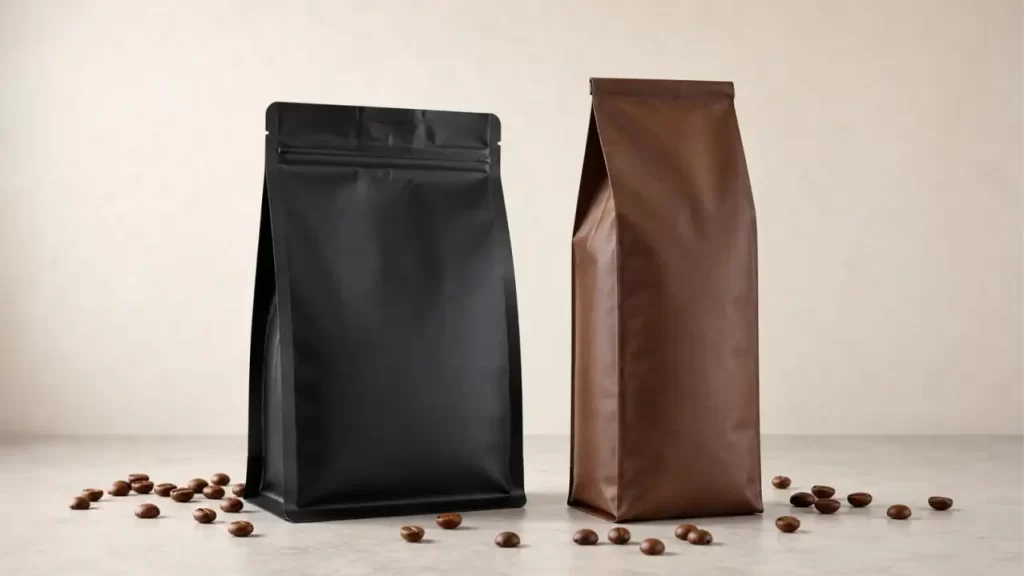
Packaging formats change based on the coffee type, whether it is whole bean or ground coffee, target fill weight, the desired barrier level, fill type, and the brand's preference on the shelf finish.
Flat Bottom Pouch vs. Side Gusset Bag: Structural Difference
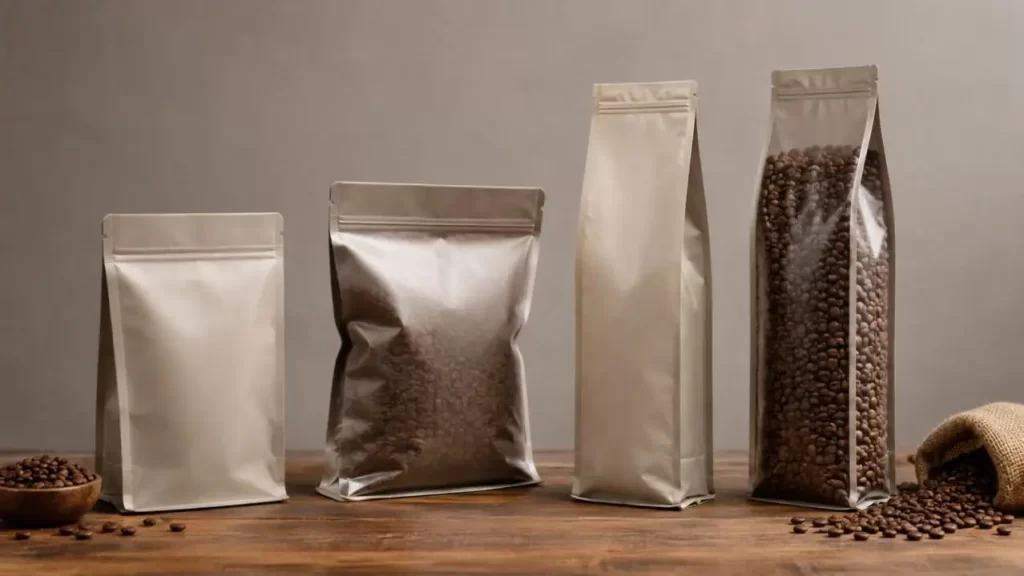
A Flat Bottom Pouch uses a defined bottom panel together with front, back, and side panels. After filling, the bag develops a box-like footprint and stands upright with a relatively structured shape.
A Side Gusset Bag expands mainly through folded side panels. Its final shape is usually taller and narrower, and the base is formed largely by the way the coffee settles inside the bag.
| Coffee Packaging Factor | Flat Bottom Pouch | Side Gusset Bag |
| Base Structure | Defined flat bottom | Product-formed base |
| Shelf Profile | Wide and structured | Tall and narrow |
| Branding Area | Large front and side panels | Strong vertical front panel |
| Typical Use | Premium retail coffee | Traditional coffee packaging |
| Zipper Integration | Very convenient | Available, structure-dependent |
| Degassing Valve | Easily integrated | Easily integrated |
| Filling Behavior | Broad, structured opening | Depends more on gusset opening |
Shelf Stability and Premium Coffee Presentation
One of the most noticeable differences between Flat Bottom Pouches and Side Gusset Bags is the side profile.
Flat Bottom Pouches take up more footprint space on the shelf. This is advantageous for coffee brands who aim for stronger shelf presence. Because of this increased footprint, each bag is able to stand more erect post-fill.
Side Gusset Bags are more traditional coffee bags in shape. If a coffee brand wants to have more of a traditional coffee bag shelf presence, Side Gusset Bags are a better choice.
Pack stability requires attention to the following:
• Pack weight: Behavioral differences exist for a nominal weight beginning at 250g.
• Bean Density: Light and dark roast coffee can have different volume differences at the same nominal weight.
• Laminate Stiffness: Stiff laminates hold their shape better during the finishing process.
• Gusset Depth: Gussets with excessive depth will fill more space.
• Coffee Settling: Whole bean coffee settles more than ground coffee.
Whole Bean vs. Ground Coffee Changes the Choice
The Flat Bottom Pouch vs. Side Gusset Bag decision should not be made without considering the coffee itself.
Whole Bean Coffee
Whole beans have more irregular particle geometry and require more internal volume for a given weight.
Important requirements include:
• Adequate Gusset Expansion
• Sufficient Headspace
• One-Way Degassing Valve
• Strong Seals
• Enough Opening Width For Filling
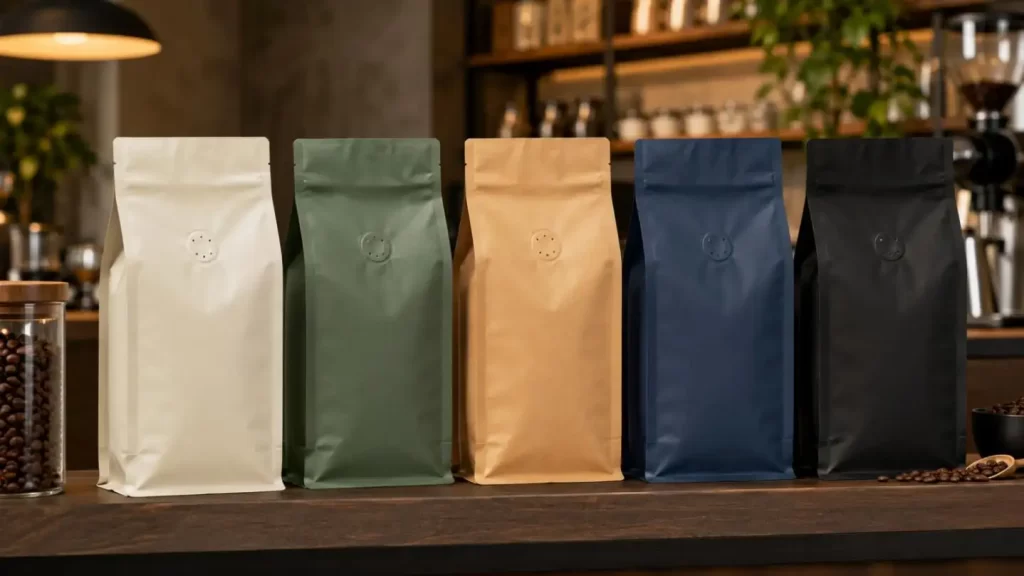
Flat Bottom Pouches are often well suited to premium whole-bean coffee because their wider structure provides strong shelf presentation and convenient reclosure.
Ground Coffee
Ground coffee settles more compactly and can produce dust around the sealing area.
Packaging priorities shift toward:
• Clean Top Sealing
• Oxygen Barrier
• Controlled Filling
• Powder Contamination Management
• Reliable Zipper Closure
Both bag formats can work well, but the filling system becomes more important than appearance alone.
Degassing Valve Placement
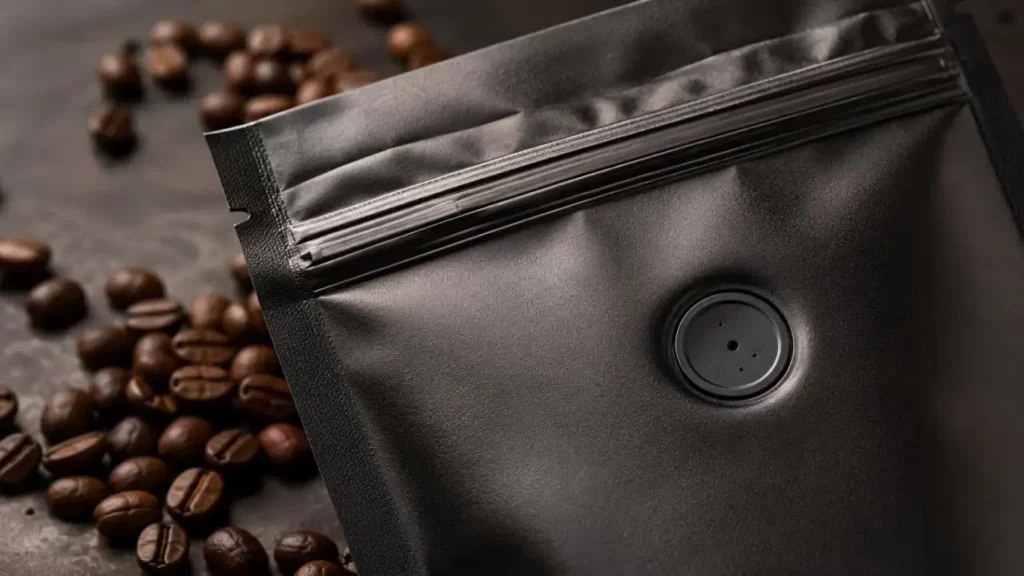
Freshly roasted coffee releases carbon dioxide after roasting, so a one-way degassing valve is an important feature for many coffee packaging applications.
In a Flat Bottom Pouch vs. Side Gusset Bag comparison, the valve itself does not determine which format is better. The key issue is placement.
Valve positioning should avoid:
• Zipper Tracks
• Top Heat-Seal Zones
• Machine Gripper Areas
• Major Artwork Elements
• Heavily Folded Gusset Sections
Flat Bottom Pouches have conveniently located broad panels for valve placement when planning artwork and machine layout.
Side Gusset Bags work well for valve placement too and offer similar sealing and resealing options. However, their narrower and taller shape may require more precision.
Zipper and Resealability
Bag reseal closure appeals to consumers for a higher perceived value of resealed coffee packaging, especially for 250 g and 500 g retail packages.
Flat Bottom Pouches utilize a zipper and a pocket-shaped opening, which provides a large opening for a press-to-close style zipper seal.
Side Gusset Bags can also use zippers, but the design must account for:
• Gusset folds
• Usable bag opening
• Filling nozzle clearance
• Top-seal space
For frequent-use retail coffee packs, zipper accessibility should be tested on the filled bag rather than judged from an empty sample.
Barrier Performance Depends on Material, Not Bag Shape
A common mistake in Flat Bottom Pouch vs. Side Gusset Bag comparisons is assuming that one format protects coffee freshness better simply because of its shape.
Structure determines how to protect coffee.
These factors include:
• OTR: Indicates the transmission of oxygen
• WVTR: Indicates the transmission of moisture
• Light barrier: Designed to block light from reaching coffee
• Seal integrity: Stops air entering through seals
• Valve integrity: Needs to allow the release of gas with low oxygen permeability
Both can be made of high barrier laminates, recyclable structures, kraft designs, and metallized materials.
Filling and Sealing Compatibility
The packaging system is a significant factor for Side Gusset Bags vs Flat Bottom Pouches.
• Pouch pickup: The machine picks and places each pouch for every cycle in a consistent manner
• Opening width: Needed for unobstructed flow of beans or ground coffee
• Gusset opening: During product introduction, the gusset must expand fully
• Coffee settling: Adequate time for grind to settle to the bottom
• Seal contamination: Minimize dust and balls of coffee
• Zipper position: Should not be in the path of filling nozzle, grippers, or sealing jaws
Changing from a Side Gusset Bag to a Flat Bottom Pouch requires a redesign of the gripper opening, controls for settling, and seal positions with fill height modifications.
Branding and Printable Area
For specialty coffee brands, packaging is also a communication surface.
Flat bottom pouches provide:
• Broad front panels for roast branding
• Side panels for origin and tasting notes
• Rear panels for brewing information
• A structured premium retail appearance
Side gusset bags provide:
• Tall vertical branding
• Familiar coffee packaging proportions
• Side gussets for additional information
• Efficient use of narrower shelf widths
If appearance matters, Flat Bottom Pouches have more visual shelf space.
Which Coffee Bag Should You Choose?
Consider a Flat Bottom Pouch:
• Appearance on store shelves
• Sturdiness of standing package
• Extensive branding
• Package design ease with zipper
• Packaging whole bean coffee in sleeves
Choose a side gusset bag when your project prioritizes:
• A traditional coffee-bag format
• Taller, narrower packaging geometry
• Established filling-line compatibility
• Flexible capacity for larger coffee formats
The final Flat Bottom Pouch vs. Side Gusset Bag decision should be based on actual coffee type, fill weight, valve position, barrier requirements, filling equipment, and filled-bag trials.
For coffee brands comparing these two formats, Cyan Pak can support custom Flat Bottom and Side Gusset coffee bags with tailored dimensions, barrier structures, printing, zippers, and degassing valves. Evaluating the finished coffee pack rather than only the empty bag makes it easier to choose a structure that performs consistently from roasting and filling through transport and retail display.
FAQs
Q1. What makes a Flat Bottom Pouch different from a Side Gusset Bag for coffee?
A Flat Bottom Pouch has a defined bottom and side gussets that make the pouch wider and more box shaped. A Side Gusset Bag uses side folds to expand the bag and results in a taller and narrower coffee pouch.
Q2. Which bag has better shelf stability?
A Flat Bottom Pouch will always have a better looking shelf presence because it has a visible base. The stability of the bags ultimately relies on the coffee's weight, bulk density, film stiffness, and gusset dimensions.
Q3. Which is better suited for whole bean coffee?
Flat Bottom Pouches have a visible base that makes it a better option for whole bean coffee. A Flat Bottom Pouch has better shelf presentation than a Side Gusset Bag, has more volume, and comes with the option to have a zipper and a degassing valve.
Q4. Can both coffee pouch options have a degassing valve?
Both Flat Bottom Pouches and Side Gusset Bags can have a degassing valve. The valve should be placed away from the zipper, seal zone, gusset folds, machine grip zone, and important graphics to ensure it stays functional.
Q5. Are both types of coffee bags (“Side Gusset” or “Flat Bottom”) able to have zippers?
Both bags can have a resealable closure, but zipper integration for Flat Bottom Pouches is easier because of the structured top of the pouch.
Written by
Cyan Pak Coffee
At Cyan Pak Coffee, we provide professional coffee packaging solutions for roasters, cafés, and beverage brands. From design and printing to production and delivery, our team offers a full range of custom packaging services. Our products include coffee bags, boxes, takeaway cups, and other packaging accessories, all customizable in materials, sizes, and print finishes. Focusing on sustainability, innovative design, and low minimum orders, we help brands create unique and efficient packaging experiences.