


Updated 1 week ago
Best Packaging for Coffee Beans: Match the Bag to Your Sales Needs
Cyan Pak Coffee
At Cyan Pak Coffee, we provide professional coffee packaging solutions for roasters, cafés, and beverage brands. From design and printing to production and delivery, our team offers a full range of custom packaging services. Our products include coffee bags, boxes, takeaway cups, and other packaging accessories, all customizable in materials, sizes, and print finishes. Focusing on sustainability, innovative design, and low minimum orders, we help brands create unique and efficient packaging experiences.

best packaging for coffee beans
The best packaging for coffee beans is the one that is most appropriate to the product, the sales channel and the day to day packing operation. A fancy bag may not be suitable for a wholesale client; a plain "bulk" bag might not provide enough space for a retail brand to present itself well.
First, let’s break down three choices: the shape of the bag, protection design and features customers utilize. The selection of one doesn't resolve the other.
The following guide should help roasters and coffee brands decide when a specific pouch type is worth considering and how to make a decision when ordering from a group of Cyan Pak's pouches.
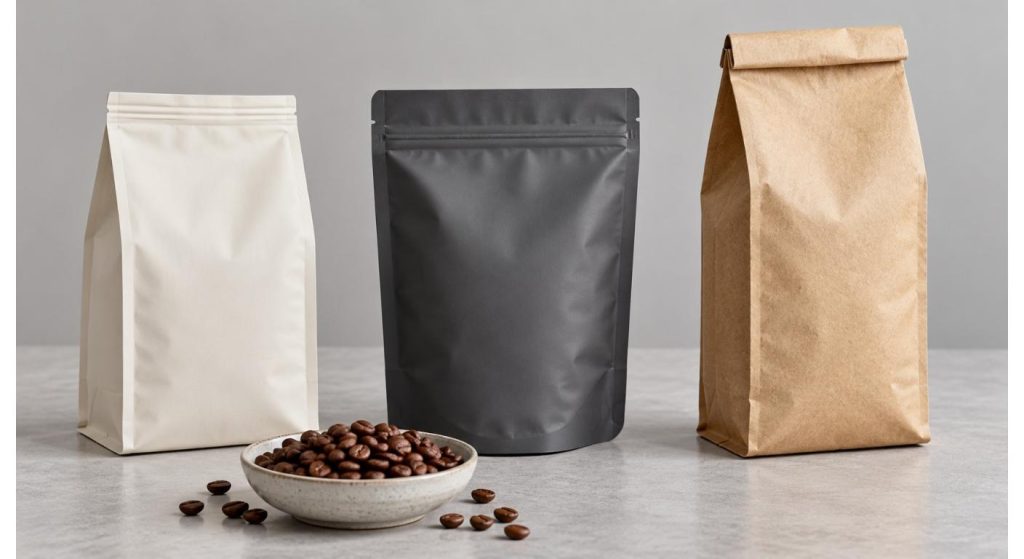
Make sure to set the Requirements before you start comparing Bag Shapes.
First, explain the coffee/café experience. Think about how the beans get from the roastery to customers, whether they go straight to the customers or are in retail distribution, or if they are shipped in individual parcels in a subscription model. State how long and under what conditions the product should be stored.
Then describe the buyer's use of the coffee. A household might use the same bag over and over again, but a busy café might use a larger bag rapidly. These patterns affect the value of a zipper, the size of the opening and correct portion.
Set your packing strategy up, as well. There should be enough space for the bag to be filled and enough space to seal the bag. It should fit your work bench or equipment, instead of being awkward and ineffectual.
This is a short brief that will have the same task for each candidate. It also does not make the decision to choose a format about like artwork, which is often attractive.
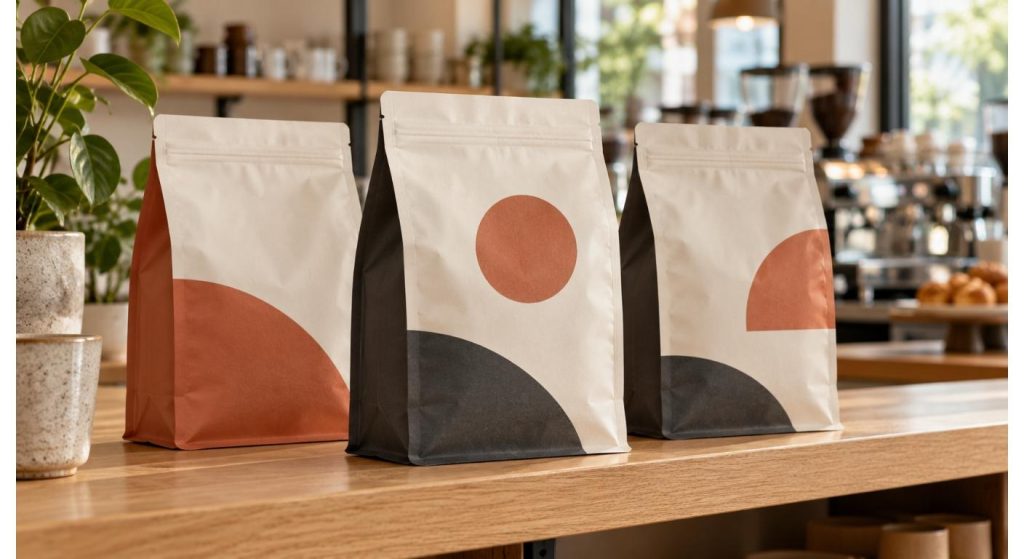
Flat Bottom Pouches are an option for Structured Retail Presentation.
Cyan Pak's flat bottom pouches are a good first choice when shelf presence is a key factor. They have a clear base that allows for an upright and structured presentation, and come in various sizes, materials and print options.
This format should be considered if a customer wants to also differentiate multiple coffees on a shelf. Determine if the front artwork is clearly visible on the filled pouch and if the side information is easily visible.
The compromise is that this should be a structured look that deserves to be in the project. Do not automatically assume that a top quality shape is a better choice, compare the dimensions, quote and carton arrangement with another appropriate format.
Test a sample that has been filled up on the shelf. A coffee bag that appears to have a proper ratio with the product in the picture might not be the right ratio for your coffee and for the amount you want to fill your bags with.
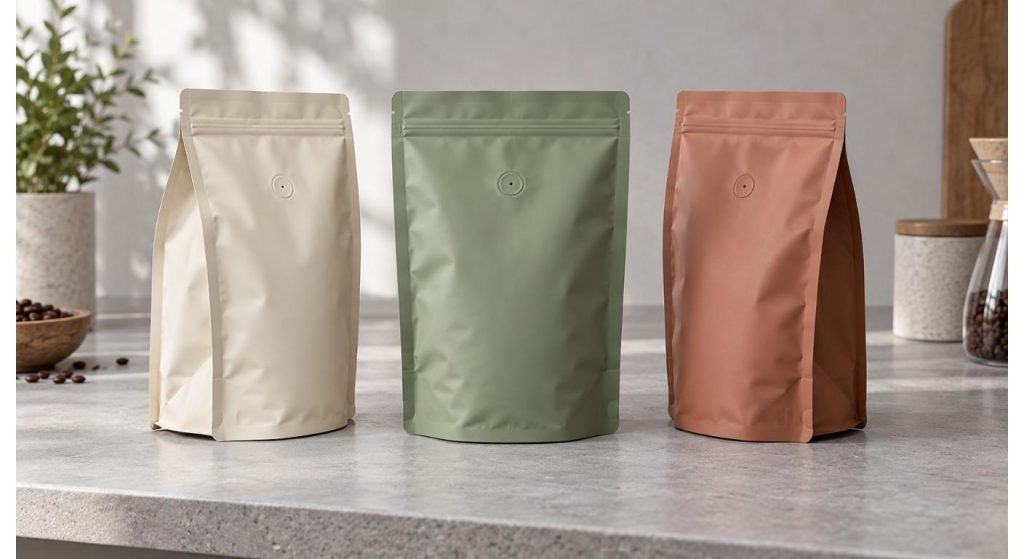
With Stand-Up Pouches, enjoy a versatile retail selection.
If you are looking for a self-standing bag that is simple in design (front and back), a stand-up pouch might be a good choice. This format is available from Cyan Pak and can be customized to your desired size, material, print and functionality.
Can be used as a starting point for brands that are creating multiple retail products with similar visual layouts.
Check the base containing the beans. Behavior will depend on the dimensions and fill proposed for the presentation, and an empty sample can't be used to determine the final presentation.
Check the beginning and the end, too. For a pouch that is small in size it is still necessary that it is easy to fill and easy to use by the customer. Consult with a flat bottom option before making a decision which is better for the range.
Instead of Side Gusset Bags, try Quad Seal Bags for larger packs.
Cyan Pak's side gusset coffee bags offer roaster style coffee bags with expandable side panels for larger volume coffee lines. Evaluate them based on the requirements for capacity, practical storage and repeat supply, not a strict retail silhouette.
Please carefully review the proposed reclosure. Don't assume that each side gusset setup comes with a zipper, negotiate the closure and its usage with the customer.
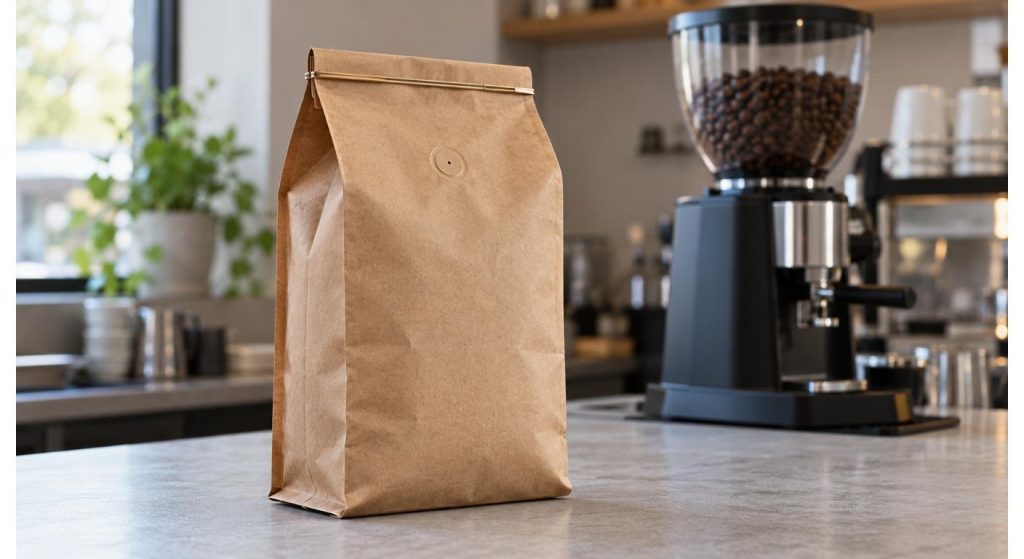
Cyan Pak's quad seal pouches provide enhanced vertical seal edges and a sharper pouch shape for retail or higher volume use. When you're looking for extra structure and useful panels to print info, you should keep them in mind.
Make a comparison of both styles in the same delivery arrangement – filled and packed. Corner seals and gussets result in varying shapes, both of which require the confirmation of material strength, sealing quality and protection during handling.
Select Protection without Basing it on the Exterior.
If you have narrowed down your choice of shape, then state what protects the beans. The texture of the paper, matte surface or metallic finish is not a measure of the performance of the entire construction.
Talk about oxygen and moisture protection with regard to the coffee and distribution time. Ask for data and explain the tests that were carried out. A stated barrier value cannot be used to derive a guaranteed shelf life without validations on the product.
Also, freshly roasted coffee will emit carbon dioxide, therefore consider whether a one-way degassing valve will be necessary for the proposed pack. Verify it fits with the bag and its location with respect to filling and sealing areas.
If recyclability is a priority, consult the entire structure (including accessories) with the collection system of the market to which they will be sold. Suitability for the environment, protection, should be specified not left to be ‘assumed' from the outside of the bag.
Use beans (not weight) to size the bag.
As for the nominal capacity, it is not a final dimension, but a guide. The amount of volume that can be provided by the bean depends on the coffee and a bag still requires space for filling, sealing and regular handling.
Experiment with your own product to determine the width, height and gusset that is to be tested. Look for fullness, the placement of the beans against the closure and if the opening is easily accessible. Don't reduce dimensions to the point where it becomes a problem for operators to maintain the sealing area.
Then put the filled bags in the shipping carton in which they will be sent. Test if they fit into place without being compressed or have extra space. A unique solution for the subscription parcels may be necessary when compared to wholesale cartons.
Write down the working dimensions (the ones that worked) in relation to the actual size of the coffee and fill weight. The reference will be more helpful for future purchases than a generic capacity description (from other brand packaging).
Use a Focused Sample Comparison to make the Final choice.
Cyan Pak has several different types of coffee packaging samples to look at and compare the differences, before narrowing down a specification. Test each sample to ensure that it is the desired material, size and accessories.
Identify two realistic possibilities, and compare them to the needs you have identified at the start. Add filling convenience, sealed appearance, customer opening, shelf presentation and delivery fit. Use the same coffee, fill weight as possible.
Make comparisons on an equal basis. The delivered price refers to the price after printing, valves, closures, order quantities and freight and is therefore not necessarily a description of the complete purchase.
Choose the one that will work well in your key needs. The ideal packaging choice is a one that your purchasing, packing and brand teams can all clearly articulate, and cite evidence for.
| Quote Variable | Comparison Basis |
| Order quantity | Same quantity per size and artwork |
| Material specification | Equivalent agreed protection requirements |
| Accessories | Same valve and reclosure requirements |
| Printing | Same coverage and agreed finish |
| Delivery | Same destination and freight basis |
Conclusion
There are different types of packaging that are the best fit for different tasks when it comes to coffee beans. Flat bottom or stand up pouches have various retail applications, and side gusset or quad seal bags have merit for higher volume situations. Add in the selected format, appropriate protection, handy features and verified dimensions and go over the entire specification with Cyan Pak.
FAQs
Q1. What is the best bag to package retail coffee beans?
Both the flat bottom and stand-up pouches are worthwhile to consider. Evaluate filled shelf presentation, ease of opening and full quoted specification.
Q2. How about side gusset bags for wholesale coffee?
They're a suitable choice for high-volume applications. Ensure that it's right for the customer in terms of capacity, closure, material strength and carton fit.
Q3. Does a high quality bag make a difference on the freshness of coffee?
Not by itself. The freshness of the product is influenced by protective construction, seal, whether or not a valve is required, filling conditions and storage.
Q4. Is it possible to make the choice of dimensions based on the coffee weight alone?
Use weight as a starting point. Measure actual beans to be sure of the dimensions, leaving space to fill and seal.
Q5. Before placing my custom order, what should I request?
Ask appropriate samples and a clear quote. Agree dimensions, construction, accessories, printing, quantities and agreed production reference.
Written by
Cyan Pak Coffee
At Cyan Pak Coffee, we provide professional coffee packaging solutions for roasters, cafés, and beverage brands. From design and printing to production and delivery, our team offers a full range of custom packaging services. Our products include coffee bags, boxes, takeaway cups, and other packaging accessories, all customizable in materials, sizes, and print finishes. Focusing on sustainability, innovative design, and low minimum orders, we help brands create unique and efficient packaging experiences.
Related Articles

Large Capacity Coffee Packaging: Match Bulk Packs to Handling and Customer Needs

Coffee Packaging for Retail Display: Match Your Pack to How Customers Shop

Sustainable Coffee Packaging Bags: Create a Coordinated Packaging Range