

Updated 1 week ago
Recyclable Coffee Packaging: Bringing Protection and Practical Features Together
Cyan Pak Coffee
At Cyan Pak Coffee, we provide professional coffee packaging solutions for roasters, cafés, and beverage brands. From design and printing to production and delivery, our team offers a full range of custom packaging services. Our products include coffee bags, boxes, takeaway cups, and other packaging accessories, all customizable in materials, sizes, and print finishes. Focusing on sustainability, innovative design, and low minimum orders, we help brands create unique and efficient packaging experiences.

recyclable coffee packaging
The appearance and performance of a coffee bag can be more or less the same, and yet it can be quite different. What you see on the outside gives you no indication of either oxygen protection or sealing characteristics or the ability to be recycled. When coffee brands talk about recyclable packaging, there's more than meets the eye to the packaging art.
The difficulty lies in protecting and providing material compatibility in a final design. During storage, delivery and daily use, a barrier film, valve, zipper and printed surface must all work in harmony.
This guide helps coffee brands and pack buyers understand those relationships in the context of developing a retail bag. The goal is to have a clear specification to safeguard the coffee and provide the proper disposal information.
To recognize the description of a PE-based structure
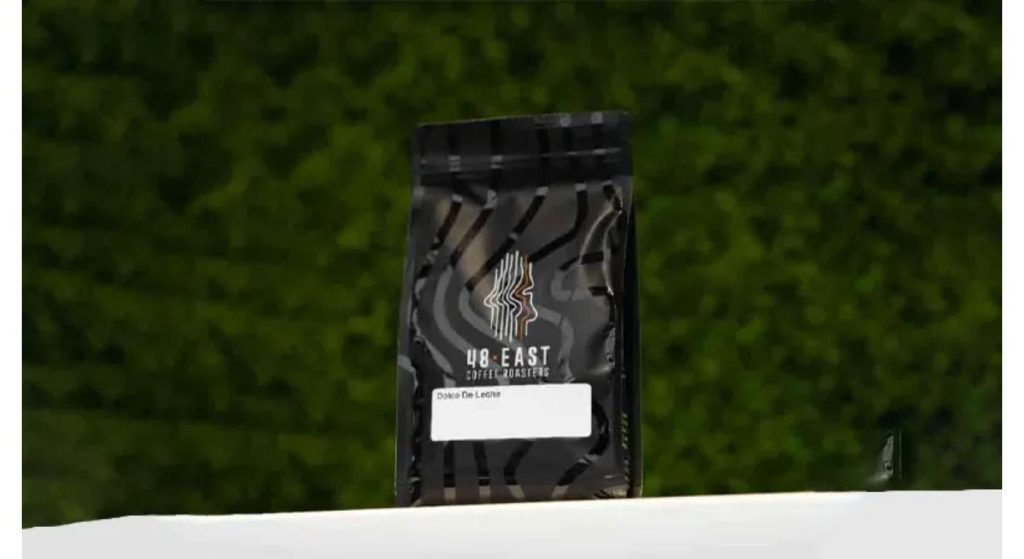
Cyan Pak launches the LDPE-bags in its portfolio of recyclable coffee packaging. LDPE is a polymer family code that does not specify all of the characteristics of the final package.
There are multiple layers of functionality that can be represented by a PE-based design. It should therefore not be understood that “Mono material” means there is only one physical layer, or that the bag is made of no other materials. Request a construction and an evaluation of its compatibility to the planned recycling process.
Do not assume that all bags that have the same feel or look are made of the same material – treat this as if it were a combination that was approved.
Identify Barrier Around Your Coffee and Distribution Conditions
Barrier performance is a measure of the ability of the packaging to reduce transmission through the packaging material. Oxygen and water vapor are often part of the discussion of packages for coffee, but the level of performance needed varies with the coffee and storage conditions.
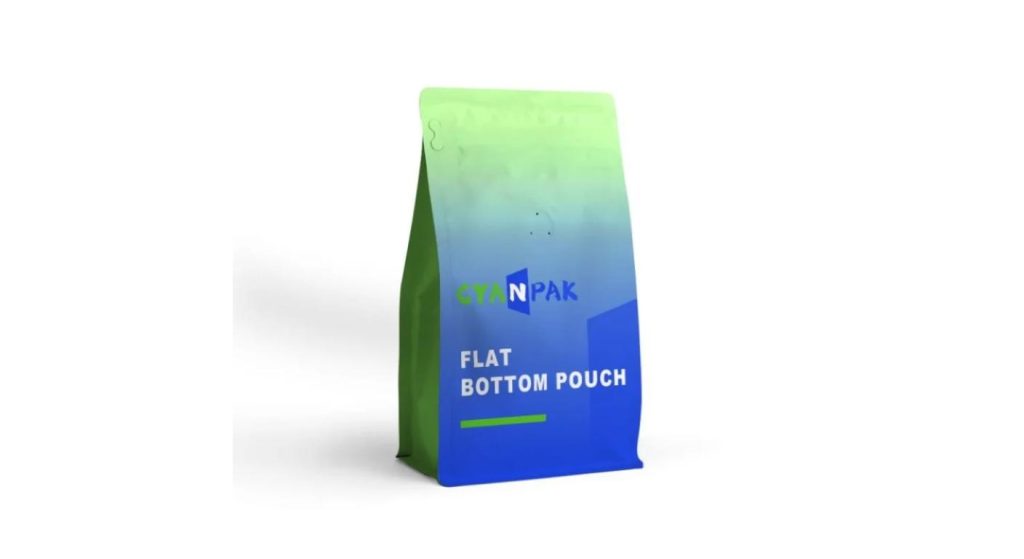
The flat bottom pouch page of the Cyan Pak gives an EVOH barrier in a Mono-PE packet. Rather than simply assuming that recyclable packaging has to be an unprotected single film, it is an applicable construction to discuss.
Request oxygen transmission rate and water vapor transmission rate information for structure being considered. When comparing figures from different quotations be sure to confirm the following: Units, temperature, humidity, and material tested.
Film data is used to help you choose the type of material you need, it is not a universal shelf life for your coffee. The result is also influenced by the filling conditions, initial oxygen, seals, valves and storage. Finalise a product-specific validation strategy, prior to the commercial use of a shelf-life statement.
Try Out the Valve with the Seal Different Jobs
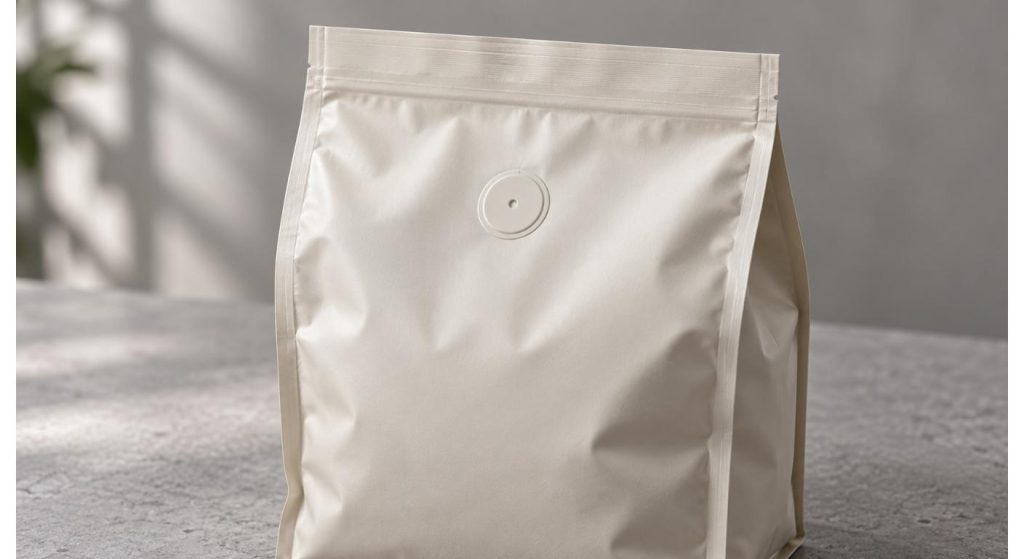
When coffee is roasted it exudes carbon dioxide. The one-way degassing valve is a suitable valve to allow gas to escape but restrict the amount of air which gets in. It works with the barrier structure, it does not take its place.
Cyan Pak provides coffee values that are recyclable and compatible with packaging materials. Verify the chosen part, the mode of fixation and the ability of the finished bag for the planned recycling assessment.
The top heat seal also serves another purpose: that of closing the packaged (filled) product before it is sold. Indicate its location in relation to the zipper and valve, ensuring enough room between it and the zipper/valve for normal filling and sealing.
Never test a bag to see if it has gas in it by squeezing the bag to check for integrity. Have appropriate checks agreed with the manufacturer. The appearance of the seal from the outside can be used to help identify defects, but will not determine the full performance of the valve, attachment surface or finished pouch.
Create Opening Experience Beyond the First Tear
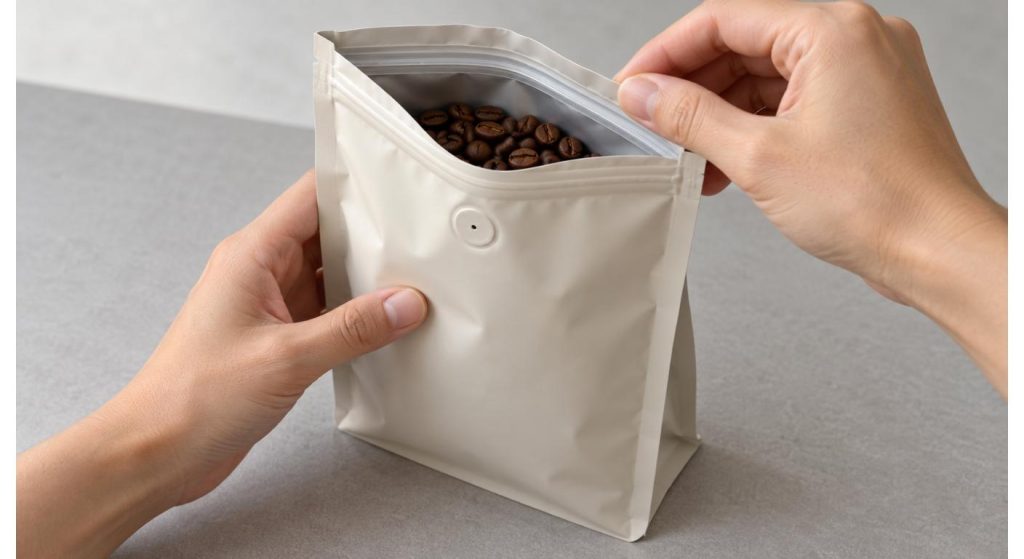
A coffee bag that can safeguard the coffee before it reaches the consumer should be usable after the purchase as well. The tear feature, zipper and mouth width will affect whether or not the customer can access the coffee and close the package easily.
Look at the opening sequence with a completed sample. The sealed section should be such that it can be removed from the customer without damaging the reclosure. Make sure the opening has enough access, but not so much that a lot of force has to be applied or it makes an odd edge.
A zipper allows for reclosure, although this does not re-create the condition of the original factory-sealed condition. Do not assume that the unopened shelf life of a bag is the same after opening if the bag can be zipped closed.
Imagine what happens to the package when the coffees are going down. A convenient closure and manageable bag shape can facilitate everyday handling. Consider these details in conjunction with the specification of the material rather than cosmetic details.
Use the Print and Finish Within the Material Review to check if the prints will fit within the material.
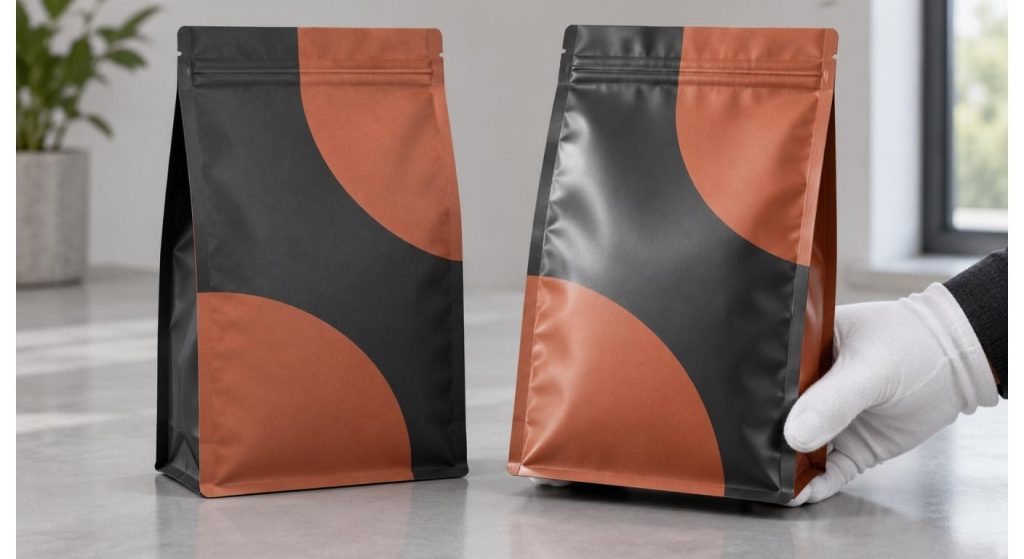
Even with a recyclable coffee packaging, the package can still have a unique brand identity. The scheme of colour, layout and surface treatment should go hand in hand with the proposed structure.
Cyan Pak's digital printing service allows for custom printing of coffee bags and offers reduced minimum order quantities. Be sure to consult with the client on the selected substrate and finish prior to approving an artwork route as not all decoratives are compatible with all construction.
Please note any additions after printing. Labels, sleeves, metallics and other finishes should be included in the finished pack review. An evaluation of the material prior to these additions may not represent the end product.
Allow actual use of the proposed substrate as appropriate. Ensure the print reference is linked to the construction record so that a subsequent print change won't become an undocumented material change.
Transform the Spec into UCI's.
Technical compatibility and real accessibility of recycling are related, but distinct, issues. A bag can be produced for a specific stream but within some locations, customers may not have an appropriate collection service.
Make sure of acceptance in the desired market before giving the instructions. Don't necessarily put flexible packaging into the same bin as rigid plastic packaging. Apply guidance as applicable to the collection system that the customer is on.
Also, components should be addressed accurately in instructions. Avoid instructing the customers to take off a valve or zipper if necessary for the confirmed path. Similarly, don't imply that all parts will stay together if no supporting information is provided.
Ensure recycling claims are separate from composting. That does not mean that a recyclable PE bag is necessarily compostable. The packaging your brand has selected should be simple and accurate, allowing customers to take action based on your packaging.
Accept 1 Complete Design Not Single Parts To Individual Designs
Put the decisions on a project specification including construction, dimensions, barrier requirements, components and printing and disposal wording. All elements should be about the same proposed bag.
Some of Cyan Pak's coffee packaging samples will give you an idea of materials and formats to consider. Define the proper sample characteristics that meet the target production specification and those that need to be confirmed.
Iron out those disagreements prior to performance or appearance. A sample provided to illustrate a format may not be the same barrier, thickness or combination of components that are being quoted.
Ensure that an accepted physical reference, and a dated specification, are kept together. Re-check requirements if there is a change in the finish, valve, or construction in a succeeding order. This maintains the association between the assessed package and the package that is delivered.
| Proposed Change | Evidence to Reconfirm |
| Film thickness or barrier composition | Updated material data and recycling assessment |
| Valve model or attachment method | Component compatibility and package integrity |
| Zipper or opening feature | Opening and reclosure sample approval |
| Ink, coating, or added label | Finished-pack assessment and print approval |
Conclusion
A coordinated design is necessary for recycling of coffee packaging: the material for protection, the valve for degassing and the seal and closure to serve various stages of use. Let Cyan Pak know your coffee type, shelf planned, bag type and target market and they can discuss a specification with you and relevant evidence.
FAQs
Q1. Is mono-material a coffee bag that's made of a single layer?
No. Multiple functional layers can be combined in a PE based construction. Ask for the complete specification and the assessment it will be subject to when the pack is complete.
Q2. Is it possible to have a barrier to oxygen in recyclable coffee packaging?
Yes. Cyan Pak is a Mono-PE version with a EVOH barrier. Verify suitability for performance & recycling for specific proposed structure.
Q3. Does a degassing valve obviate the need for good seals?
No. Seals close the package and the valve controls the release of the gas. Both are required to work in the completed bag.
Q4. Does re-closed zipper bring back the shelf life when it is not opened?
No. Reclosure is for daily reopening. Does not re-seal or eliminate oxygen once it has been added.
Q5. Are customers in households allowed to recycle all recyclable coffee bags?
No, there is no definitive list of materials that are accepted and collection rules. Give instructions according to the finished package, and the system existing in the target market.
Written by
Cyan Pak Coffee
At Cyan Pak Coffee, we provide professional coffee packaging solutions for roasters, cafés, and beverage brands. From design and printing to production and delivery, our team offers a full range of custom packaging services. Our products include coffee bags, boxes, takeaway cups, and other packaging accessories, all customizable in materials, sizes, and print finishes. Focusing on sustainability, innovative design, and low minimum orders, we help brands create unique and efficient packaging experiences.
Related Articles

Large Capacity Coffee Packaging: Match Bulk Packs to Handling and Customer Needs

Coffee Packaging for Retail Display: Match Your Pack to How Customers Shop

Sustainable Coffee Packaging Bags: Create a Coordinated Packaging Range