

Updated 2 months ago
When Premium Design Hurts Recycling: Rethinking Eco Friendly Packaging
Cyan Pak Coffee
At Cyan Pak Coffee, we provide professional coffee packaging solutions for roasters, cafés, and beverage brands. From design and printing to production and delivery, our team offers a full range of custom packaging services. Our products include coffee bags, boxes, takeaway cups, and other packaging accessories, all customizable in materials, sizes, and print finishes. Focusing on sustainability, innovative design, and low minimum orders, we help brands create unique and efficient packaging experiences.

Eco Friendly Packaging
Matte black films, metallic details, soft-touch coatings and full-surface graphics can make coffee packaging look premium. But a recycling system does not judge packaging by shelf appeal. It sees polymers, pigments, coatings, adhesives, labels and accessories.
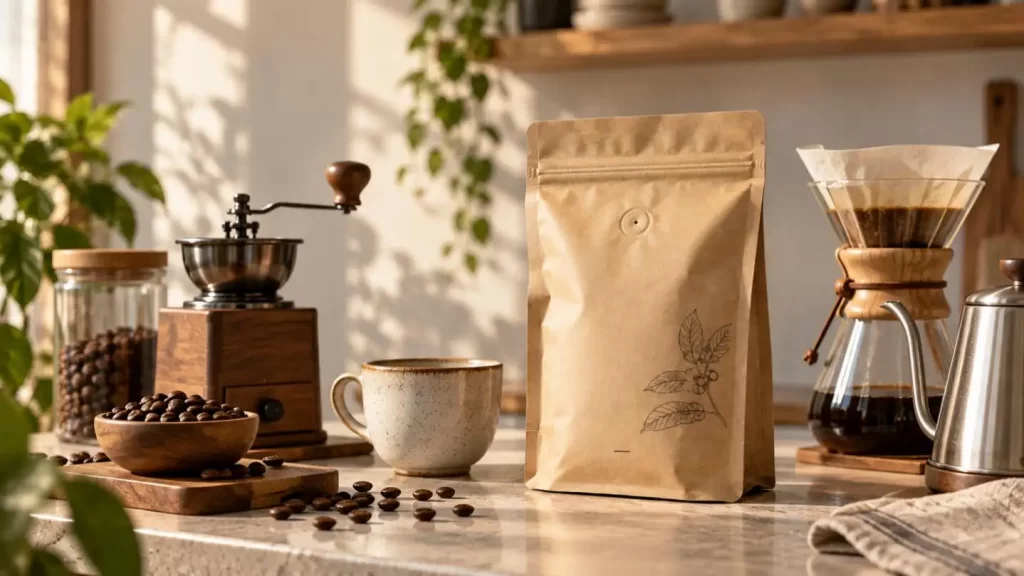
At Cyan Pak, we believe Eco Friendly Packaging should be designed from both directions: brand presentation at the front end and material recovery at the end of life.
That means premium design is not the problem. The real issue is whether decorative choices interfere with identification, sorting or reprocessing.
Why Premium Packaging Can Become a Recycling Issue
A flexible coffee pouch may appear simple, yet its structure can include:
• Base film;
• Barrier layer;
• Printing ink;
• Lamination adhesive;
• Varnish or coating;
• Zipper;
• One-way degassing valve;
• Label or sleeve.
For Eco Friendly Packaging, each component matters because recycling happens as a system.
The typical pathway is:
Collection → Sorting → Material Identification → Washing → Reprocessing → Recyclate
If a pouch is not correctly identified or contains incompatible components, it may be rejected, downgraded or reduce the quality of the recycled material.
This is why we do not evaluate Eco Friendly Packaging only by asking, "What is the main film?"
The better question is:
How does the complete package behave in the intended recycling stream?
1. Dark Colors: A Branding Choice With Sorting Consequences
Black and deep-color packaging is common in specialty coffee because it communicates intensity and premium positioning.
However, many sorting facilities use near-infrared, or NIR, technology to identify polymer types.
Certain dark pigments—particularly traditional carbon-black formulations—can reduce NIR detectability.
That does not mean every black pouch is unsuitable for Eco Friendly Packaging. It means color selection should be treated as a technical specification.
Before approving a dark design, packaging teams should ask:
• Is the pigment NIR detectable?
• Does the entire pouch need to be dark?
• Can contrast come from typography or selective printing?
• Can the base film remain detectable while still achieving the intended visual identity?
The difference is important: "black" is a design description; NIR detectability is an engineering parameter.
2. Metallic Effects Need to Be Defined Technically
Design briefs often use terms such as "metallic," "foil look" or "gold finish," but these can refer to very different constructions.
| Effect | Typical Function | Key Eco Friendly Packaging Question |
| Metallic ink | Decoration | What is the ink chemistry and coverage? |
| Metallized film | Barrier + appearance | Is the metallized layer compatible with the target recycling stream? |
| Aluminum foil | High barrier | Does the multilayer structure hinder material recovery? |
| Spot metallic effect | Decoration | Can the effect be localized rather than full coverage? |
This distinction matters because appearance alone does not reveal recyclability.
For Eco Friendly Packaging, the decorative method should be reviewed together with the substrate, barrier layer and recycling route.
3. Printing Coverage Is a Material Decision
Printing is often treated as a branding issue. In recyclable packaging design, it is also a material-input decision.
High ink coverage can influence:
• Optical sorting;
• Color of the recyclate;
• Contamination load;
• De-inking performance;
• Final recycled-material quality.
The objective is not to eliminate graphics. It is to use printing more deliberately.
At Cyan Pak, this means thinking about where ink creates real brand value and where it simply adds complexity.
Practical options may include:
• Reduced background coverage;
• Selective color fields;
• Unprinted material windows;
• More efficient artwork layouts;
• Digital printing for shorter runs and SKU flexibility.
Good Eco Friendly Packaging often comes from better graphic discipline rather than weaker branding.
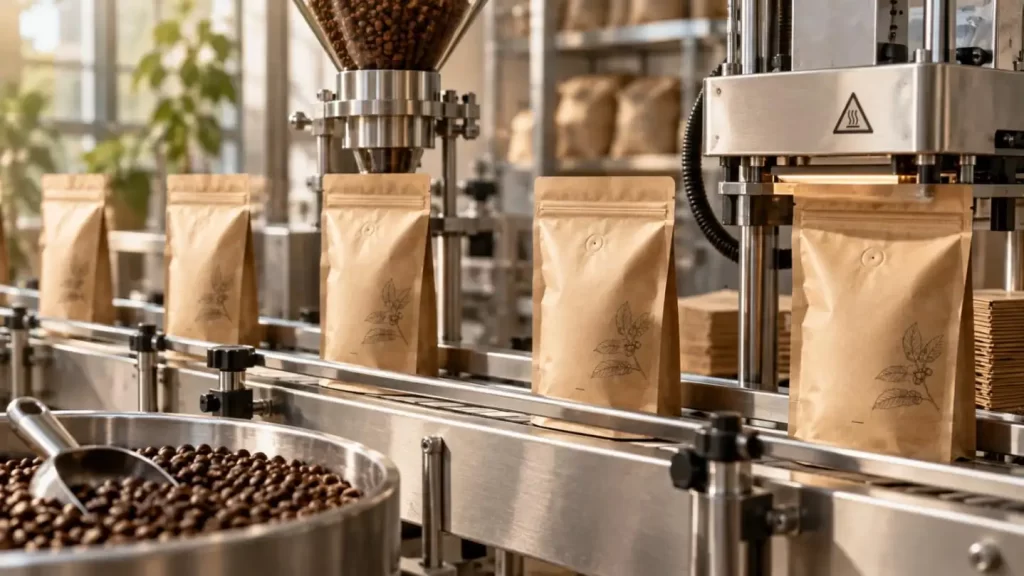
4. Labels, Sleeves and Adhesives Can Hide the Main Polymer
A recyclable film can still become difficult to sort if a large label or sleeve masks the material underneath.
The label system should be evaluated as four linked variables:
Label material + Coverage + Adhesive + Separation behavior
For example:
• A paper label can introduce fibre;
• A full-body sleeve can interfere with polymer identification;
• Incompatible adhesive can remain during washing;
• Excessive coverage can reduce sortability.
For Eco Friendly Packaging, the label should never be treated as an isolated decoration.
5. Matte and Soft-Touch Finishes Are Part of the Structure
Premium coffee packaging often relies on tactile finishes.
Common options include:
• Matte varnish;
• Soft-touch coating;
• Spot gloss;
• Tactile coating;
• Surface texture.
These finishes can improve shelf appeal, but they also add another chemical or material layer.
That means the right question is not:
"Can we make it matte?"
It is:
"What coating creates the matte effect, how much is applied, and how does it affect the complete Eco Friendly Packaging structure?"
This is a typical example of where design and packaging engineering need to work together.
Premium Does Not Have to Mean Material Complexity
Eco Friendly Packaging does not need to look basic.
Premium visual identity can come from:
• Strong typography;
• Controlled color palettes;
• Material texture;
• Pouch geometry;
• Selective printing;
• Matte surfaces;
• Precise registration;
• Carefully limited decorative effects.
The goal is to move premium value away from unnecessary material complexity and toward better design execution.
Coffee Adds Another Engineering Requirement: Product Protection
Coffee packaging cannot be designed around recyclability alone.
Roasted coffee is sensitive to:
• Oxygen;
• Moisture;
• Aroma loss;
• Light exposure;
• CO₂ release after roasting.
That is why coffee Eco Friendly Packaging must balance recyclability with barrier performance.
A one-way degassing valve allows CO₂ to escape while helping reduce oxygen entry. Resealable zippers improve consumer convenience, but both components remain part of the final package and should be considered during recyclability assessment.
At Cyan Pak, our eco coffee packaging portfolio includes recyclable LDPE, kraft paper, rice paper and PLA-based options for different packaging strategies.
Selected recyclable flat-bottom formats are available with specifications such as:
| Parameter | Cyan Pak Option |
| Capacity | 250g / 500g / 1kg |
| Thickness | 100–150 μm |
| Printing | Gravure or digital |
| Colors | Up to 10 |
| Closure | Zipper / heat seal / optional tin tie |
| Finish | Matte / gloss / natural kraft |
| Functional option | One-way degassing valve |
These specifications are not independent choices. Thickness affects stiffness and sealing; barrier structure affects shelf life; zipper and valve materials affect the final package design.
A Better Eco Friendly Packaging Workflow
Before approving a premium coffee pouch, we recommend working in this order:
1. Define product requirements
Shelf life, oxygen sensitivity, moisture sensitivity and distribution conditions.
2. Select the primary material route
PE, PP, fibre-based or another appropriate structure.
3. Build the required barrier
Do not sacrifice coffee protection simply to simplify the structure.
4. Add branding deliberately
Review ink, pigments, coatings and metallic effects.
5. Check every accessory
Zipper, valve, label and adhesive should be assessed with the main pouch.
6. Evaluate the finished package
The base film alone does not determine recyclability.
Design for Both the Customer and the Recycling System
Every coffee pouch ultimately has two audiences.
The first is the customer choosing a product on the shelf. The second is the sorting and recycling system handling the package after use.
The strongest Eco Friendly Packaging solutions are designed for both.
For coffee brands evaluating recyclable materials, kraft-based structures, custom printing, degassing valves or resealable formats, Cyan Pak's Eco Coffee Bag range offers a practical place to compare different packaging approaches around product protection, visual design and end-of-life considerations.
FAQs
Q1. Does Cyan Pak offer Eco Friendly Packaging for coffee?
Yes. Cyan Pak offers recyclable LDPE, kraft paper, rice paper and PLA-based coffee packaging options for different packaging strategies.
Q2. Can Cyan Pak produce recyclable coffee bags?
Yes. Cyan Pak offers PE-based recyclable coffee bag formats, including flat-bottom bags with customizable printing, closures and degassing valves.
Q3. Can premium coffee packaging still be recyclable?
Yes, but the complete structure must be considered. Inks, coatings, labels, zippers, valves and barrier layers can all affect recycling compatibility.
Q4. Does Cyan Pak offer black or dark-colored coffee bags?
Yes. Dark and custom-colored packaging is available, but pigment choice and target recycling requirements should be considered during design.
Q5. What printing options does Cyan Pak provide?
Cyan Pak offers gravure and digital printing, with selected formats supporting up to 10 colors.
Written by
Cyan Pak Coffee
At Cyan Pak Coffee, we provide professional coffee packaging solutions for roasters, cafés, and beverage brands. From design and printing to production and delivery, our team offers a full range of custom packaging services. Our products include coffee bags, boxes, takeaway cups, and other packaging accessories, all customizable in materials, sizes, and print finishes. Focusing on sustainability, innovative design, and low minimum orders, we help brands create unique and efficient packaging experiences.
Related Articles

Large Capacity Coffee Packaging: Match Bulk Packs to Handling and Customer Needs

Coffee Packaging for Retail Display: Match Your Pack to How Customers Shop

Sustainable Coffee Packaging Bags: Create a Coordinated Packaging Range