


Updated 3 weeks ago
Wholesale Flat Pouches for Coffee for Specialty Roasters
Cyan Pak Coffee
At Cyan Pak Coffee, we provide professional coffee packaging solutions for roasters, cafés, and beverage brands. From design and printing to production and delivery, our team offers a full range of custom packaging services. Our products include coffee bags, boxes, takeaway cups, and other packaging accessories, all customizable in materials, sizes, and print finishes. Focusing on sustainability, innovative design, and low minimum orders, we help brands create unique and efficient packaging experiences.
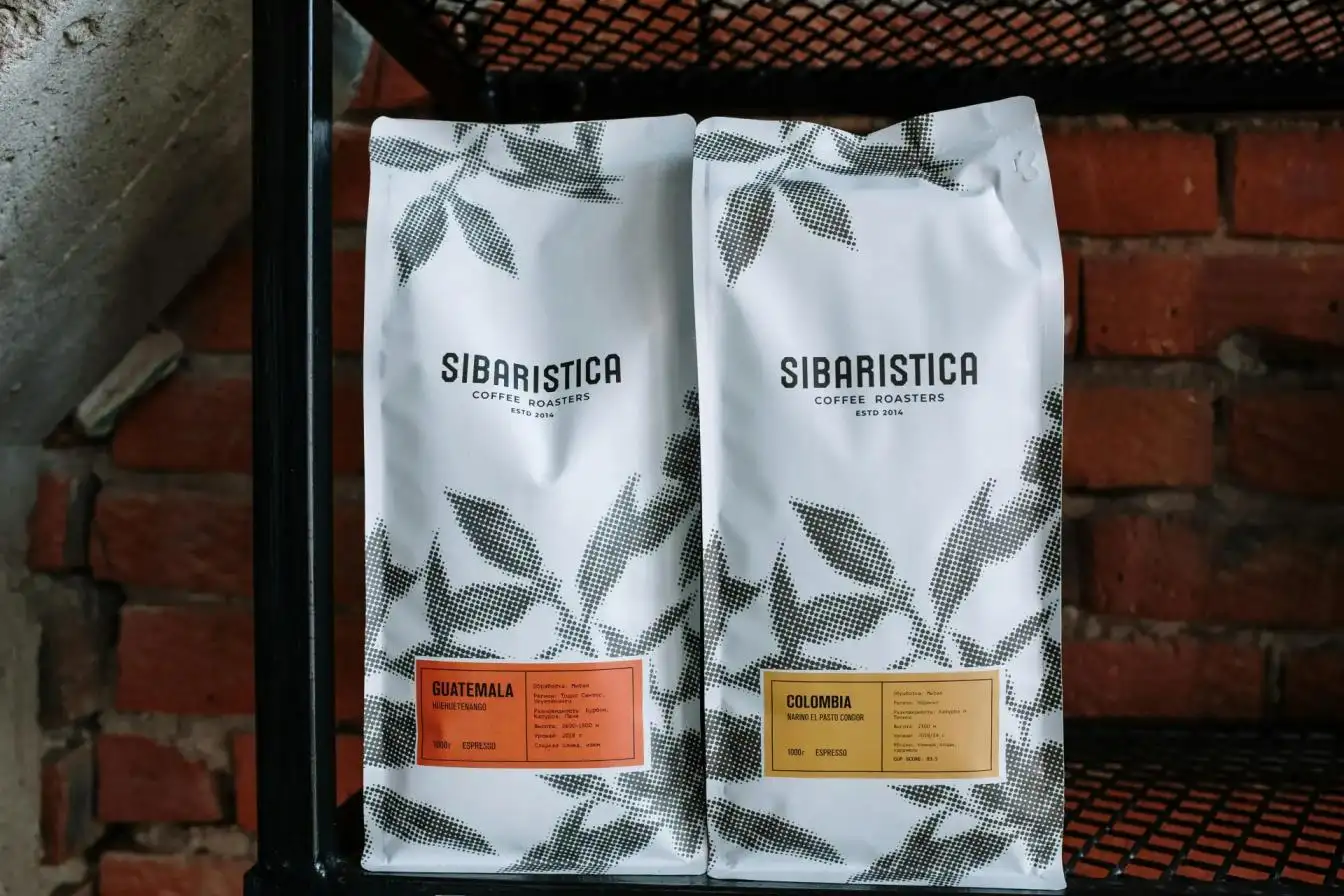
Wholesale Flat Pouches for Coffee
Pouches for Coffee are increasingly specified as part of a complete freshness-control system rather than simply as printed bags. For specialty roasters managing multiple origins, roast profiles, seasonal releases and pack sizes, the pouch must balance oxygen and moisture barrier, CO₂ release, sealing performance, filling efficiency, branding and purchasing flexibility.
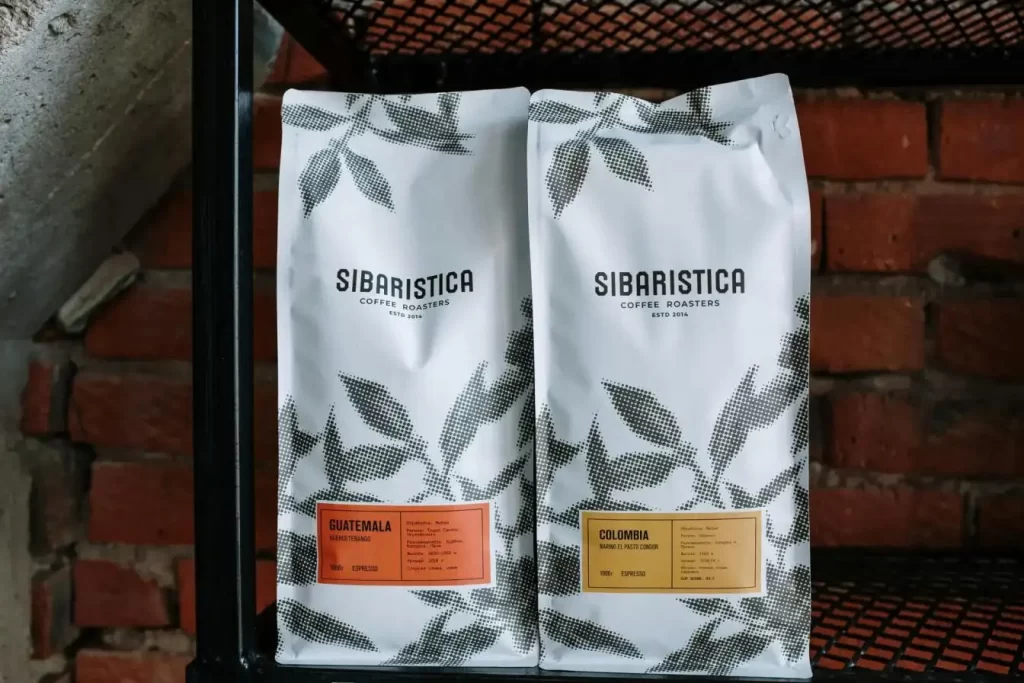
That means customizing the style of coffee packs to the coffee and packing process. Our Wholesale Flat Pouch solutions let coffee roasters customize around dimension, materials, barrier structures, finishes and printing, all allowing coffee roasters to build packs around true production requirements instead of a constraint based around a standard packaging specification.
Why Specialty Coffee Creates More Demanding Packaging Requirements
Coffee post-roast releases CO₂, while the coffee quality is negatively impacted by light exposure, moisture and oxygen. Specialty coffee generally has a greater preference for a greater selection of SKUs than mass-market coffee.
Before purchasing Wholesale Flat Pouches for Coffee, consider the following four requirements:
•Roast and product format: Whole bean, ground coffee and different roast profiles post-processing all have different characteristics.
•Time between roasting and packing: How important the management of CO₂ is dependant on how much time has elapsed before the pouches are sealed.
•Expected distribution period: Local or short supply chains versus long supply chains require different barrier approaches.
•SKU structure: Printing method, MOQ and the amount of inventory impact the barrier specifications of packaging, depending on the variety of formats and artwork.
When considering packaging requirements for coffee, it is best to start with the coffee type, and not with pouch specifications.
Barrier Performance: Look Beyond Film Thickness
A common purchasing mistake is assuming that a thicker laminate automatically provides better protection. Barrier performance depends primarily on material structure and individual functional layers.
Oxygen Transmission Rate
OTR measures the amount of oxygen passing through a packaging material under defined test conditions. Lower oxygen transmission can support better protection, but an OTR figure is only useful when the test method, temperature and relative humidity are known.
Water Vapor Transmission Rate
WVTR measures moisture transmission through flexible packaging. It is particularly relevant because roasted coffee should be protected from uncontrolled environmental moisture.
For professional Wholesale Flat Pouches for Coffee, buyers should request measurable barrier information rather than accepting descriptions such as "excellent barrier."
| Parameter | What It Indicates | What Buyers Should Check |
| OTR | Oxygen transmission | Value, units, test conditions |
| WVTR | Moisture transmission | Value, units, temperature/RH |
| Light Barrier | Exposure to visible/UV light | Transparent, metallized or opaque structure |
| Seal Strength | Package closure integrity | Material and sealing conditions |
| Total Thickness | Physical film build | Do not use alone to judge barrier |
Comparing Coffee Pouch Material Structures
Different Structures Solve Different Packaging Priorities
| Structure | Technical Strength | Trade-Off | Typical Consideration |
| Aluminum Foil Laminate | Strong gas and light barrier | More complex laminate | Extended protection priorities |
| Metallized Film | Good barrier-to-cost balance | Performance varies by structure | Mainstream specialty coffee |
| High-Barrier Polymer | Flexible structure design | Requires verified test data | Customized applications |
| Recyclability-Oriented Structure | Supports material reduction goals | Barrier and sealing must be validated | Sustainability-focused brands |
Cyan Pak can develop Wholesale Flat Pouches for Coffee using different material and barrier configurations. The more reliable approach is to match laminate performance with shelf-life expectations, sales channels and sustainability goals rather than selecting the most complex material by default.
When Does a Coffee Pouch Need a Degassing Valve?
A degassing valve is useful when CO₂ generated by roasted coffee needs to leave the package without leaving the pouch permanently open to the external environment.
The decision chain should be:
Roast Profile → Degassing Behavior → Packing Time → Headspace → Valve Requirement
A valve does not replace effective barrier material or reliable sealing.
For example:
•Coffee packed relatively soon after roasting may require closer attention to gas management.
•Ground coffee should be evaluated separately from whole beans because grinding changes surface area and gas-release behavior.
•Coffee allowed to degas before packing may require a different packaging strategy.
This is why buyers requesting Wholesale Flat Pouches for Coffee should provide more information than "250 g pouch with valve."
Zipper, Heat Seal and Consumer Reclosure
A zipper and a production heat seal perform different functions.
The top heat seal establishes the primary package closure before sale.
The zipper allows the consumer to reclose the pouch after opening.
When designing the pouch, consider:
•Zipper Position
•Usable Filling Opening
•Valve Location
•Top-Seal Width
•Tear Notch Position
•Distance Between Coffee Particles And Sealing Area
For repeatedly opened 250 g or 500 g specialty coffee packs, resealability can improve usability, while single-use samples may not require the same closure system.
Flat Pouch vs. Flat-Bottom and Stand-Up Formats
Not every coffee product needs the same format.
| Format | Main Advantage | Best Evaluated For |
| Flat Pouch | Compact and material-efficient | Samples, smaller packs, shipping |
| Flat-Bottom Pouch | Stable upright presentation | Premium retail and larger branding area |
| Stand-Up Pouch | Flexible retail display | General consumer coffee packaging |
Cyan Pak manufactures both flat coffee pouches and flat-bottom formats, allowing roasters to choose according to packaging volume, retail presentation and production requirements rather than forcing every SKU into one pouch style.
Match Pouch Size to Actual Coffee Volume
Nominal weight alone is not enough to define pouch dimensions.
A 250 g coffee pouch should be specified by considering:
•Whole Bean Or Ground Coffee
•Bean Density And Roast Level
•Required Headspace
•Valve Position
•Zipper Position
•Nitrogen Flushing, If Used
•Filling Equipment
•Final Sealing Allowance
Two coffees with the same net weight may occupy different volumes. Sample filling tests are therefore more reliable than selecting dimensions from weight alone.
Integrating Wholesale Flat Pouches for Coffee Into Production
Packaging performance also depends on how the pouch behaves during filling and sealing.
Before Production
Confirm:
•Pouch Opening Width
•Filling Funnel Compatibility
•Zipper And Valve Position
•Heat-Seal Temperature Range
•Sealing Pressure And Dwell Time
During Packing
Avoid coffee particles and oils entering the top seal area. Contamination can reduce seal consistency even when the laminate itself performs correctly.
During Storage
Unused pouches must be maintained as:
•Clean and dry
•Not exposed to direct sunlight or heat
•Sealed from dust, closure and storage damage
Before large-scale ordering, ensure performance testing is carried out.
For Wholesale Flat Pouches for Coffee, buyers should examine both functional and food-contact data.
Validation of the specification could include the following:
•OTR and WVTR test data;
•Materials structure declaration;
•Seal - performance test;
•Food-contact data;
•Migration data;
•Intended destination market needs.
For EU market packing needs, the packaging should be checked against the requirements of food contact as outlined in Regulation (EC) No 1935/2004 and the specific provisions in Regulation (EU) No 10/2011 regarding plastics.
What to Include in a Wholesale Coffee Pouch RFQ
A detailed RFQ reduces sampling cycles and makes supplier comparisons more meaningful.
| RFQ Item | Recommended Information |
| Product | Whole bean or ground coffee |
| Coffee | Roast profile and packing timing |
| Capacity | Net weight and desired dimensions |
| Barrier | Target OTR/WVTR or shelf requirement |
| Features | Valve, zipper, tear notch |
| Appearance | Matte, gloss or other finish |
| Printing | Artwork quantity and SKU count |
| Packing | Manual, semi-automatic or nitrogen flush |
| Market | Destination and compliance requirements |
| Volume | Quantity per size and artwork |
Cyan Pak supports customization of Wholesale Flat Pouches for Coffee across materials, dimensions, printing and functional features, making it possible to develop specifications around both coffee protection and operational requirements.
Make the Final Decision on Total Packaging Fit
Pricing is only one factor in the Specialty Coffee Association of Europe's cost analysis version 3.0. Other factors include barrier performance, seal reliability, valve configuration, printing consistency, MOQ flexibility, documentation, production compatibility and inventory risk.
Cyan Pak can assist specialty roasters trying to develop new coffee packaging or enhance current packaging with flat pouches and flat-bottom packaging based on coffee type, fill volume, barrier requirements, branding, and the coffee packing process. From a strong RFQ and sample validation, we can determine the best Wholesale Flat Pouches for Coffee that best suit the coffee and roastery needs.
FAQs
Q1. Does Cyan Pak offer custom Wholesale Flat Pouches for Coffee?
Cyan Pak can produce custom flat pouches for coffee to size, material, finish, and printing. This allows specialty roasters the opportunity to fulfill custom coffee packaging and brand requirements.
Q2. What Coffee products are outfitted with Cyan Pak's flat pouches?
Cyan Pak's flat pouches for coffee include ground coffee, samples, single serve, and other packaging for coffee that is packaged in a smaller format. Buyers should choose a final dimension and barrier structure corresponding to the coffee volume and the packing process.
Q3. Does Cyan Pak have high barrier Wholesale Flat Pouches for Coffee?
Yes, high barrier material structures are available. Roasters must ensure that the exact laminate structure is confirmed and requested since the "high barrier" statement is not a definitive barrier value for that particular structure.
Q4. Will Cyan Pak make custom printed coffee pouches?
Cyan Pak will perform custom printing on flat coffee pouches. This combined with customizable material, size, and finish will help specialty roasters maintain a consistent brand packaging on all coffee products.
Q5. Does Cyan Pak offer low MOQ coffee packaging?
Cyan Pak offers low MOQ coffee packaging on select custom printed packaging. Because MOQ will vary due to the material, size, printing, and the number of artwork elements, buyer's should confirm MOQ listed when a quote is given.
Written by
Cyan Pak Coffee
At Cyan Pak Coffee, we provide professional coffee packaging solutions for roasters, cafés, and beverage brands. From design and printing to production and delivery, our team offers a full range of custom packaging services. Our products include coffee bags, boxes, takeaway cups, and other packaging accessories, all customizable in materials, sizes, and print finishes. Focusing on sustainability, innovative design, and low minimum orders, we help brands create unique and efficient packaging experiences.