


Updated 3 weeks ago
High Barrier Flat Bottom Coffee Bags With Zipper: How Oxygen and Moisture Protection Work
Cyan Pak Coffee
At Cyan Pak Coffee, we provide professional coffee packaging solutions for roasters, cafés, and beverage brands. From design and printing to production and delivery, our team offers a full range of custom packaging services. Our products include coffee bags, boxes, takeaway cups, and other packaging accessories, all customizable in materials, sizes, and print finishes. Focusing on sustainability, innovative design, and low minimum orders, we help brands create unique and efficient packaging experiences.

Flat Bottom Coffee Bags With Zipper
Flat Bottom Coffee Bags With Zipper have become a practical format for specialty roasters and coffee brands because the package combines shelf stability, a stable retail shape, resealability, and room for high-quality printing. But the flat-bottom format itself does not protect coffee. Long-term protection depends on how the barrier film, heat seals, zipper, degassing valve, filling process, and storage conditions work together.
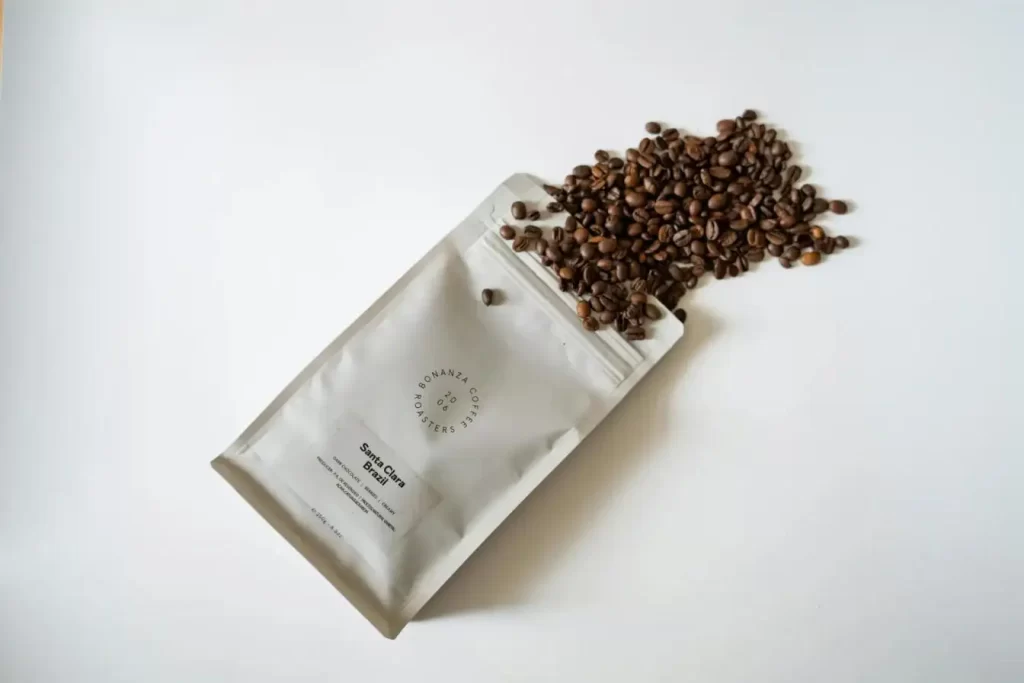
At Cyan Pak, we approach Flat Bottom Coffee Bags With Zipper as a complete packaging system. Material structure should be selected around the coffee format, expected shelf life, distribution environment, and filling method—not simply around pouch thickness or appearance.
Why Oxygen and Moisture Matter After Roasting
Roasting creates hundreds of volatile aroma compounds. Once roasted coffee is exposed to oxygen, oxidation can progressively change its aroma and flavor profile. Moisture creates a separate packaging challenge because water vapor can migrate through flexible packaging even when the pouch has no visible leak.
This creates two different barrier requirements:
•Oxygen protection: Prevents oxygen from entering into sealed packages.
•Moisture protection: Reduces the amount of water vapor permeating from the package into every sealed unit of coffee.
•Package integrity: Assures that seals, folds, valve areas, and other areas are still intact and there has been no damage to the package.
Due to this, stating "high barrier" without performance specification is not sufficient when buying Flat Bottom Coffee Bags With Zipper.
OTR and WVTR: The Two Numbers Buyers Should Understand
OTR Is the Measure of Oxygen Barrier
Oxygen Transmission Rate (OTR) measures the quantity of oxygen that is transmitted through a packaging material under given testing conditions.
Generally, a lower OTR indicates a more resistant packaging material to oxygen. However, this is only valid when the testing conditions are kept constant. Buyers should check:
•Test method
•Temperature
•Relative humidity or conditioning
•Material structure
•Total thickness
Two coffee bags with the same thickness can have very different OTR results because the actual barrier layer may be completely different.
WVTR Measures Moisture Barrier Performance
Water Vapor Transmission Rate, or WVTR, evaluates how effectively packaging resists moisture transmission.
WVTR becomes particularly important when coffee is distributed through humid climates, long logistics routes, warehouses, or retail environments with changing temperature and humidity.
The practical relationship is:
Barrier film + OTR + WVTR + seal integrity = actual coffee protection
Thickness alone should therefore never be used as a shortcut for barrier performance.
Comparing Barrier Structures for Flat Bottom Coffee Bags With Zipper
Different coffee projects require different material strategies.
| Barrier Structure | Barrier Direction | Main Advantage | Key Procurement Question |
| Aluminum-based laminate | Very high barrier-oriented applications | Strong oxygen, moisture and light protection | Is this barrier level required for the planned shelf life? |
| Metallized laminate | High barrier with flexible packaging economics | Balances protection, appearance and cost | What are the tested OTR and WVTR values? |
| High-barrier mono-material | Recyclability-oriented projects | Simplifies material family | Does the recyclable structure meet the required barrier target? |
Cyan Pak supports several material directions for zipper pouch production, including PET/PE, Kraft Paper/PE, VMPET/PE and Mono-PE recyclable structures, with customizable material thickness depending on the packaging requirement.
The important point is not whether one structure is universally "best." The better specification is the one that matches the coffee, supply chain and sustainability objective.
Whole Beans and Ground Coffee Need Different Packaging Decisions
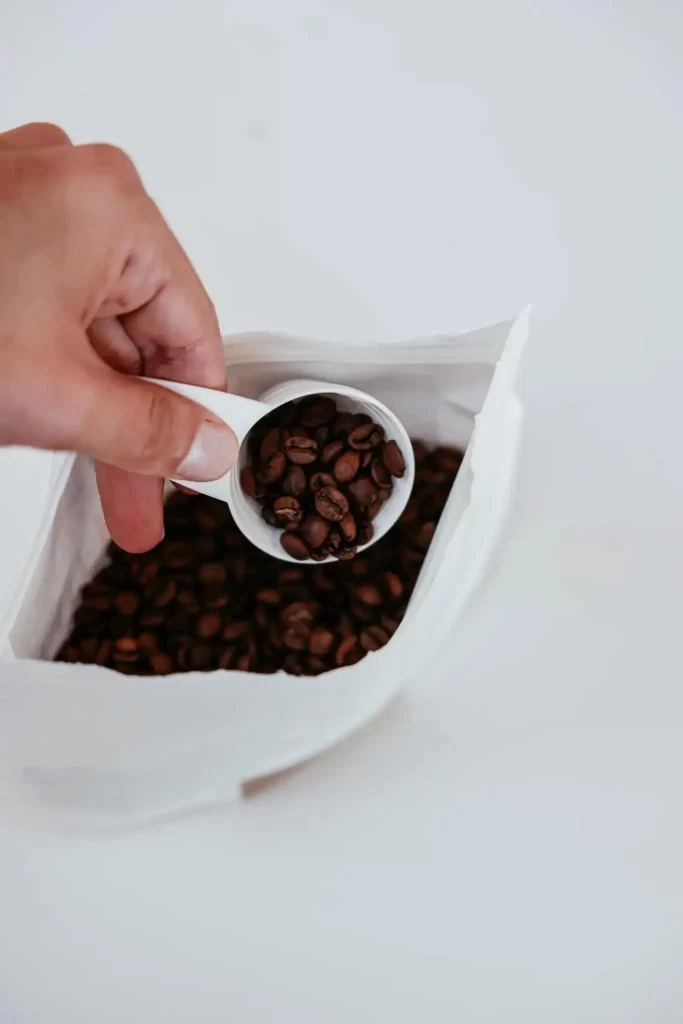
Freshly Roasted Whole Beans
Fresh coffee beans continue releasing carbon dioxide after roasting. For some packing schedules, this makes a one-way degassing valve an important system component.
When configuring Flat Bottom Coffee Bags With Zipper for whole beans, consider:
•Time between roasting and packing
•Expected degassing behavior
•Target shelf life
•One-way valve requirement
•Oxygen and moisture barrier
•Headspace
•Distribution temperature
There are distinct functions of the valve and barrier layer. The barrier layer blocks environmental transmission, whereas the valve layer controls the release of gas from a package.
Ground Coffee
Ground coffee creates a different challenge. Grinding greatly increases exposed surface area, making control of oxygen and moisture particularly important.
Fine coffee particles can also contaminate the heat-seal area during filling. Even excellent barrier film cannot compensate for an incomplete top seal.
For ground coffee, buyers should therefore evaluate:
Barrier performance + filling accuracy + seal cleanliness + top-seal reliability.
Why the Zipper Is Not the Main Unopened Seal
The zipper on Flat Bottom Coffee Bags With Zipper mainly supports repeated consumer use after opening.
Pouch protection relies upon heat seals above zippers prior to pouch opening.
Below is an example of the primary, secondary, and tertiary packaging components of a pouch:
•Top heat seal: a heat seal is used to protect the packaging.
•Zipper: Once a package is opened, closures are used to seal packs many times.
•Barrier laminate: Barrier laminates help control the transmission of oxygen and moisture.
•Degassing valve: Used to control the release of gas as required.
Understanding these types of components of packaging helps prevent potentially undervaluing a premium barrier film and overlooking the seal and functional components of the package.
Filling and Sealing Conditions Affect Barrier Performance
A material specification that performs well in the laboratory still needs to run correctly on the packaging line.
When evaluating Flat Bottom Coffee Bags With Zipper for manual or automatic filling, check four process variables carefully.
Seal Temperature
The temperature must match the inner sealant layer. Excessive temperature can distort the laminate, while insufficient heat can produce weak seals.
Pressure and Dwell Time
Heat, pressure and dwell time work together. The objective is a consistent seal across the full width rather than simply using the highest possible temperature.
Product Contamination
Coffee particles in the seal area can create channels through an otherwise sound seal. This is particularly relevant for finely ground coffee.
Zipper and Valve Position
Zippers, valves and gussets need to remain compatible with the filling and sealing equipment. Their positions should be confirmed before mass production, not after artwork and bag dimensions are finalized.
Cyan Pak's zipper pouch solutions can be customized for automatic or manual fill, allowing for machine fill upon pouch specification.
Match Bag Size to Product Volume, Not Weight Alone
Standard bags of ground coffee come in volumes of 250g, 500g and 1kg, but in this case the fill weight is not used to determine pouch size.
The required volume depends on:
•Whole bean or ground coffee
•Roast level
•Bulk density
•Desired headspace
•Valve placement
•Zipper position
•Required top-seal area
Cyan Pak provides multiple standard capacity options as well as customized dimensions, allowing Flat Bottom Coffee Bags With Zipper to be matched more accurately to the product rather than forcing coffee into a generic bag size.
What to Verify Before Ordering
Before moving from samples to production, a professional RFQ should cover measurable packaging requirements.
| RFQ Item | What Buyers Should Confirm |
| Coffee format | Whole bean or ground |
| Fill weight | 250 g, 500 g, 1 kg or custom |
| Barrier | OTR and WVTR data |
| Structure | Exact material construction |
| Thickness | Total and relevant layer specification |
| Closure | Zipper plus top heat seal |
| Valve | Required or not; position |
| Filling | Manual or automatic |
| Printing | Artwork, surface finish and print method |
| Compliance | Food-contact documentation for destination market |
For EU projects, food-contact suitability and current packaging requirements should be verified against the intended market rather than relying on a general statement such as "food grade."
Build the Barrier Specification Around the Coffee
The most effective way to source Flat Bottom Coffee Bags With Zipper is to follow a technical sequence:
Coffee Format → Shelf-life Target → OTR/WVTR Requirement → Material Structure → Zipper and Valve → Bag Dimensions → Filling Compatibility → Sealing Validation → Compliance Documentation.
At Cyan Pak, we combine customizable barrier structures, recyclable material options, zipper configurations, degassing valve options, sizes and printing into the pouch-development process. If you are planning new Flat Bottom Coffee Bags With Zipper, sharing your coffee type, fill weight, expected shelf life, destination market and filling method gives our team a much stronger basis for recommending a suitable packaging structure and preparing samples for evaluation.
FAQs
Q1. Does Cyan Pak offer Flat Bottom Coffee Bags with Zipper?
Cyan Pak provides coffee roasters and coffee brand custom Packaging with zipper closures, flexible barrier options and printing and functional bags of various sizes.
Q2. What Materials Can Cyan Pak Use for Flat Bottom Coffee Bags with Zipper?
We will design structures based on your packaging specification using PET/PE, Kraft Paper/PE, VMPET/PE and Mono-PE recyclable options.
Q3. Does Cyan Pak offer High-Barrier Coffee Bags?
We can manufacture barrier coffee bags for applications where O2, WVTR and aroma protection is essential. The buyer should specify OTR, WVTR and shelf life.
Q4. Can Cyan Pak Add a Degassing Valve to Coffee Bags?
Yes, to coffee bags where coffee continues to release gas after roasting.
Q5. Can Cyan Pak Customize the Size of Flat Bottom Coffee Bags With Zipper?
Yes, we can support custom bags of various sizes and functional flat bottom pouches to the extent bag/pouch volumes are matched with fill weight and coffee density, and bag sealing requirements.
Written by
Cyan Pak Coffee
At Cyan Pak Coffee, we provide professional coffee packaging solutions for roasters, cafés, and beverage brands. From design and printing to production and delivery, our team offers a full range of custom packaging services. Our products include coffee bags, boxes, takeaway cups, and other packaging accessories, all customizable in materials, sizes, and print finishes. Focusing on sustainability, innovative design, and low minimum orders, we help brands create unique and efficient packaging experiences.